
Wondering why post-baby weight loss feels harder than expected?
After delivery, your body is still in recovery mode, and that’s why many women feel stuck with their weight even if they “eat less.” It’s not because you are doing something wrong, but because your body has a bigger job than simply losing weight. Healing tissues, hormonal shifts, disrupted sleep, and breastfeeding all influence how your body retains weight.
In this blog, we’ll cover practical, science-backed steps to manage post-pregnancy weight loss effectively with a holistic nutrition strategy that fits your lifestyle.
Is post-pregnancy weight gain really just “fat”?
This is one of the most common questions new mothers ask after delivery, especially when they notice changes in their body shape that don’t yet feel familiar.
What does weight gain after delivery usually include?
Right after childbirth, the number on the scale isn’t just fat. It also includes:
- Fluids, your body is still balancing
- Healing tissues from delivery
- Hormonal shifts
- Sleep disruptions and stress responses
Why does eating less slow results?
If you’ve ever thought, “I’m starving but still not losing weight”.
Eating significantly less to “force weight loss” signals stress to your body. Hunger hormones rise, cravings spike, and your metabolism slows down. This is especially true if you are also breastfeeding or exhausted; your body uses every signal to protect you and your baby.
When can you safely start losing weight after delivery?
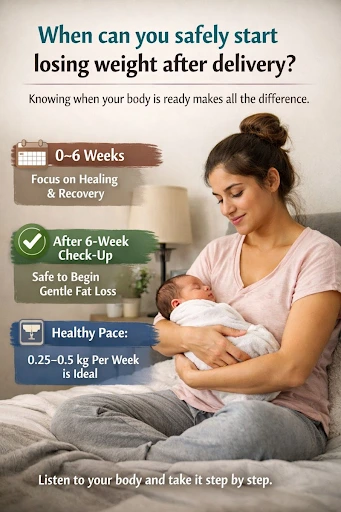
Everyone keeps giving different advice; some say start early, others say wait. Knowing when your body is actually ready makes all the difference.
Why are the first 0–6 weeks about healing?
This phase is all about recovery. Your uterus is shrinking back, hormones are stabilising, and your energy levels are in flux. Trying to “diet” here can make you tired and anxious.
When does structured fat loss become safe?
After your 6-week check-up, most women can start gentle fat loss with a balanced plan. This is where a postpartum weight-loss diet plan becomes helpful, one that respects your recovery and energy needs.
Did you come across the term “healthy pace”?
Realistic goals matter more than fast ones:
- 0.25–0.5 kg per week is a safe speed
- Faster loss often means muscle loss and fatigue
For personalised postpartum nutrition and safe weight guidance, consulting an experienced dietitian in Kolkata, like Dt. Uma Bajoria can help you recover confidently.
Postpartum weight loss timeline: what to focus on at each stage
| Postpartum Phase | What the Body Is Doing | Nutrition Focus | Weight Loss Expectation |
| 0–6 weeks | Healing, hormones shifting | Nourishing meals, hydration | No intentional loss |
| 6–12 weeks | Energy stabilising | Balanced intake+ protein | Slow, steady loss |
| 3–6 months | Hormones settling | Mild calorie deficit | Steady fat loss |
| 6+ months | Metabolism stabilises | Structured plan supports goals | Sustainable results |
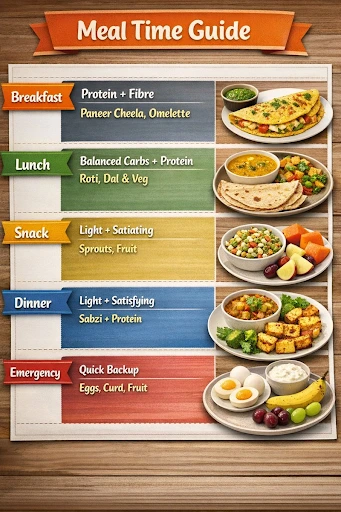
What Should You Eat at Different Times of the Day?
Most people don’t overeat because they lack willpower; they overeat because they don’t know what to eat at different times of the day. This simple mealtime guide outlines exactly what your body needs from morning to night.
Does breastfeeding change weight loss?
Breastfeeding burns calories, so why am I still not losing weight?
Yes, breastfeeding does burn calories. But here’s the part no one explains properly: it also raises your body’s energy needs. When you eat too little, your body goes into protection mode. Milk supply can slow, fatigue sets in, and hunger increases later in the day. That’s why crash dieting during breastfeeding almost always backfires.
According to research, breastfeeding mothers tend to burn an average of 500 additional calories daily, the equivalent of cutting out a small meal, having a large snack, or performing 45–60 minutes of medium-intensity physical exercise. (SOURCE)
Why can’t breastfeeding moms crash diet?
Instead of helping weight loss, crash dieting often slows it down. A smart diet for breastfeeding mothers to lose weight focuses on:
- Enough calories to support milk production
- High-quality foods for energy and recovery
- Balanced meals that keep hunger stable
This approach supports both your baby and your long-term weight goals.
Why do hunger and cravings feel intense?
Hunger and cravings increase due to hormonal changes, sleep deprivation, and the energy demands of breastfeeding.
Several factors increase hunger:
- Broken sleep patterns
- Hormonal fluctuations after pregnancy
- Energy loss from feeding sessions
These changes increase hunger hormones and reduce fullness signals. This isn’t a lack of willpower; it’s your biological clock doing its job to protect you and your baby.
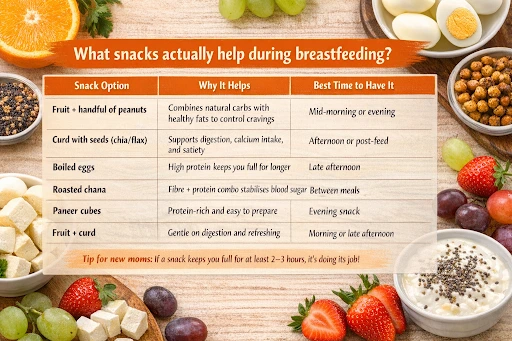
What snacks actually help?
What nutrition approach works in real life?
Know the step-by-step approach of the nutrition focus and how it works:
| Step | Nutrition Focus | Why It Works | Simple Examples |
| 1 | Protein at every meal | Keeps you full longer and supports muscle repair and recovery | Dal, paneer, eggs, fish |
| 2 | Fibre + volume foods | Adds bulk to meals so you feel satisfied without overeating | Vegetables, fruits, whole grains |
| 3 | Smart carbs | Provides energy needed for healing, brain function, and daily activity | Rice, roti, fruits |
| 4 | Proper hydration | Prevents mistaking thirst for hunger and helps regulate appetite | Water, coconut water, soups |
| 5 | Mild calorie deficit | Supports gradual fat loss without stressing the body or slowing recovery | Slight portion control, balanced meals |
Can a 7-day meal plan help?
Pregnancy changes everyday life in subtle but powerful ways, especially when it comes to food. One day, you’re hungry all the time, the next day, even the smell of cooking feels overwhelming. In the middle of all this, a simple question keeps coming up: “Am I eating right for the baby?” This is where a 7-day pregnancy meal plan brings much-needed clarity and calm.
A thoughtfully planned weekly meal routine supports both the mother’s health and the baby’s development, without making food feel complicated or restrictive.
Why a 7-Day Pregnancy Meal Plan Truly Helps
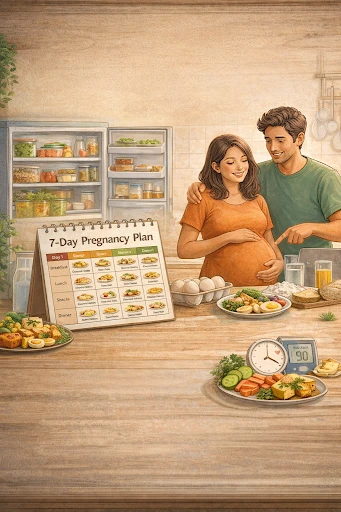
A structured meal plan ensures that essential nutrients are not missed during pregnancy:
- Folate from leafy greens and fortified grains to support early brain and spine development
- Iron from lentils, beans, and lean meats to prevent fatigue and anaemia
- Calcium from milk, curd, and paneer for strong bones and teeth
- Omega-3s and choline from eggs and fish to aid brain development
It also helps manage common pregnancy concerns:
- Reduces nausea by including easy-to-digest foods and Vitamin B6-rich options
- Prevents constipation with fibre-rich fruits, vegetables, and adequate fluids
- Keeps energy levels steady throughout the day
Small Daily Mistakes That Make Healthy Eating Feel Harder
| Common Habit | What It Leads To |
| Skipping meals | Overeating later in the day and unstable energy |
| Under-eating protein | Frequent hunger and poor satiety |
| Doing only cardio | Less muscle support and slower metabolism |
| Poor sleep | Increased hunger hormones and cravings |
Focus on healing first
Healthy eating and weight balance are rarely about extremes or perfect discipline. More often, they’re shaped by small, everyday habits that quietly add up over time. Skipping meals, sleeping less, and comparing your journey with others aren’t failures; they are human patterns, especially during pregnancy or major life changes. Once you recognise them, they become easier to adjust to.
If you want a safe, effective postpartum weight loss diet plan, expert guidance makes a huge difference.
Contact Dt. Uma Bajoria is an experienced dietitian in Kolkata. Her approach helps you move forward confidently.Visit or call at +91 9830614147 today.
People Also Ask (FAQs)
- How to gain weight quickly after giving birth?
Eat regular, nutrient-dense meals with enough protein, healthy fats, and carbohydrates. Prioritise rest, gentle strength exercises, and consistent meals to support recovery.
- When does weight loss usually begin postpartum?
Postpartum weight loss usually begins after six weeks as hormones stabilise. Healthy eating, movement, and sleep gradually support steady weight reduction.
- Is slow weight loss normal after delivery?
Yes, slow weight loss after delivery is completely normal. Your body needs time to heal, rebalance hormones, and recover strength.
- Why is postpartum weight loss harder than before?
Postpartum weight loss is harder due to hormonal shifts and recovery demands. Sleep deprivation, stress, and reduced activity also slow progress.