

Do you understand what a crash diet is? Or are you getting tricked by the internet?
Dt. Uma Bajoria, a weight-loss dietitian in Kolkata, is here to simplify the trick behind weight loss, explaining why quick fixes don’t work and what makes a plan truly effective.
This blog will give you an idea of how a proper weight-loss plan works, rather than following a rigid crash diet.
Before anything else, let’s get clear on what a crash diet actually is:
What is a Crash Diet?
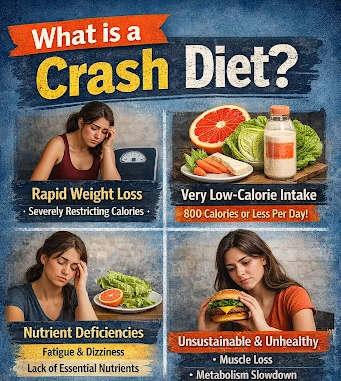
A crash diet is a way of losing weight quickly by eating little or cutting out major food groups, which is usually hard to maintain and not healthy for your body.
Why Crash Diets Fail
Crash dieting fails because it is generally unsustainable, prioritises quick results over long-term health, and often leads to water and muscle loss rather than fat loss.
So, it is important to avoid crash diets because they are designed for immediate weight loss, which affects health.
Rapid Weight Loss and Muscle Loss
Crash diets, typically defined as consuming <800–1200 calories daily, cause rapid weight loss (>1 kg/week) that often includes significant loss of metabolically active muscle tissue.
This approach triggers:
- Slowed metabolism,
- Nutritional deficiencies and
- A high risk of weight regain
Nutritional Deficiencies and Health Risks
Crash diets often rely on extreme calorie cuts or completely removing certain food groups, which can lead to serious nutritional deficiencies like low iron, vitamins B12, C, D, and zinc. This imbalance can slow down metabolism, cause muscle loss, trigger hair fall, heart palpitations, gallstones, and even affect mental health. Since these diets are not sustainable, they usually lead to rapid weight regain once normal eating resumes.
In recent times, a diet plan has become famous as the Yo-Yo Diet. Let’s give you a brief explanation of what it is:
The Cycle of Yo-Yo Dieting
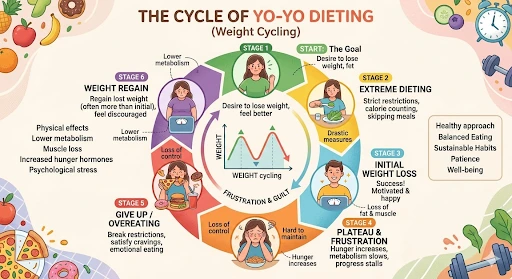
You follow a strict diet plan, say no to your favourite foods, and watch the numbers go down. Then your life is hit by cravings, stress, social events and suddenly, maintaining that routine feels impossible.
This is exactly how yo-yo dieting begins. Also known as weight cycling, it is the pattern of losing weight quickly through extreme diets and then gaining it back once those habits become difficult to maintain.
It is driven by extreme calorie restriction, causing hormonal shifts (like reduced leptin) that spike hunger and lower metabolism, making future weight loss harder.
Dt. Uma Bajoria, a weight loss dietitian in Kolkata, highlights that repeated dieting can harm metabolism, making a structured plan essential.
Principles of Sustainable Weight Loss
A sustainable weight loss plan is built on important principles that support long-term health and consistency.
These include :
- Maintaining a balanced diet,
- Practising portion control,
- Staying physically active, and
- Following a routine, your body can adapt to.
Another important principle is gradual progress, focusing on realistic changes rather than extreme restrictions, so the results are easier to maintain over time.
Some of the best practices to achieve this are explained below:
Balanced Nutrition for Long-Term Health
- A balanced diet ensures your body gets essential nutrients daily.
- Include proteins, healthy fats, fibre, and complex carbohydrates regularly.
- Avoid completely cutting out food groups to maintain overall health.
Gradual Calorie Deficit and Portion Control
- Create a small calorie deficit instead of extreme restriction.
- Focus on portion control rather than eliminating favourite foods.
- This helps in steady weight loss and prevents sudden regain.
Importance of Hydration and Sleep
- Proper hydration supports metabolism and reduces unnecessary hunger signals.
- Drinking enough water helps improve digestion and energy levels.
- Quality sleep regulates hormones that control hunger and weight.
Building a Weight Loss Plan That Fits Your Lifestyle
A successful weight-loss journey begins with making lifestyle changes for losing weight that are realistic and easy to follow every day. Instead of drastic shifts, focus on small adjustments in your eating habits, activity levels, and daily routine.
These are the various weight loss nutrition plans:
Personalised Meal Planning
A personalised approach ensures your diet suits your body, routine, and preferences. It helps you stay consistent without feeling restricted or overwhelmed.
- Choose foods that fit your daily routine and cultural preferences
- Maintain a balance of proteins, carbs, and healthy fats
- Plan meals in advance to avoid impulsive eating
Incorporating Physical Activity You Enjoy
Exercise doesn’t have to feel like a task. When you enjoy the activity, you’re more likely to stay consistent and make it a habit.
- Pick activities you enjoy, like walking, dancing, or sports
- Focus on consistency rather than intensity
- Include movement in your daily routine, not just workouts
Setting Realistic Goals and Tracking Progress
Setting achievable goals helps you stay motivated and prevents frustration. Tracking progress keeps you aware and accountable throughout your journey.
- Set small, achievable short-term goals
- Track progress through measurements, not just weight
- Celebrate consistency and small improvements regularly
Overcoming Common Challenges
You start your weight-loss journey feeling motivated and in control. Everything seems to be working until suddenly, cravings hit, progress slows down, and social situations begin to test your discipline.
This is where most people feel stuck, and where guidance from a dietitian for weight loss can help you understand these challenges and manage them better.
Managing Cravings and Emotional Eating
Cravings are not always about hunger; they are often linked to emotions, stress, or habits. Learning to identify triggers can help you respond better.
- Recognise emotional triggers like stress, boredom, or anxiety
- Choose healthier alternatives instead of completely restricting foods
- Practise mindful eating to avoid overeating
Staying Motivated During Plateaus
Weight-loss plateaus are common and can feel frustrating. However, they are a natural part of the process and not a sign of failure.
- Focus on non-scale progress like energy levels and fitness
- Reassess your routine and make small adjustments
- Stay consistent and trust the process
Social Situations and Eating Out
Eating out or attending social events can make it difficult to stick to your plan. But balance, not avoidance, is important.
- Plan ahead and choose healthier options when possible
- Practise portion control instead of skipping events
- Enjoy occasionally without guilt, then return to your routine
Role of Dietitians and Nutritionists
Professionals offering weight management in Kolkata, like Dt. Uma Bajoria helps create personalized plans based on your health, goals, and lifestyle.
- Provide customised diet plans instead of generic advice
- Help correct nutritional deficiencies and eating habits
- Offer continuous guidance and accountability
When Medical or Behavioural Support Is Needed
Sometimes, weight loss is influenced by underlying medical or psychological factors. Identifying these early can make a big difference in building an effective weight loss nutrition plan that works for your body.
- Seek medical advice for hormonal or metabolic issues
- Consider behavioural support for emotional eating patterns
- Get structured guidance to avoid repeated weight-loss failures
Quick Weight Loss Methods Always Fail
Why follow something that is mentally and physically exhausting?
Weight loss is a process, yet many people believe they can achieve results instantly by skipping meals or following crash diets. In reality, slow and steady weight loss is far more effective, helping you stay healthy while achieving results that actually last.
Ready to stop guessing and start seeing results? Consult Dt. Uma Bajoria, your go-to weight loss dietitian in Kolkata, and take control of your journey today.
Call +9830614147 to book a consultation.
H2: People Also Ask
- How Fast Should I Lose Weight Safely?
A safe and realistic pace is about 0.5 to 1 kg per week. Healthy weight-loss tips include balanced eating, nutrient-rich meals, controlling portions, avoiding overeating, and staying hydrated throughout the day. These tips focus on gradual progress, which helps your body adapt and reduces the risk of regaining weight.
- Can I Combine Diet with Exercise for Better Results?
Yes, combining a balanced diet for losing weight with regular physical activity gives better, more sustainable results. Diet helps control calorie intake, while exercise improves metabolism and overall fitness. Together, they support long-term weight management.
- Is Intermittent Fasting Effective?
Intermittent fasting can be effective for some people when done correctly. It helps control calorie intake and may improve metabolism, but it is not suitable for everyone. The key is choosing an approach that fits your lifestyle.