

Pregnancy is a time when a woman feels both excited and exhausted.
One moment, they feel excited and full of joy, and the next moment, they are completely drained. Balancing work, home, and the changing body parameters can make even simple daily tasks overwhelming.
Fatigue during pregnancy is common, but constantly feeling low on energy doesn’t have to be your norm.
With the right nutritional guidance from Dt. Uma Bajoria, a pregnancy nutritionist in Kolkata, can support both your health and your baby while maintaining steady energy levels.
In this blog, we’ll walk you through practical tips and smart eating habits that can help you stay active, healthy, and energised throughout your pregnancy.
Understanding Energy Needs During Pregnancy
During pregnancy, your body needs more energy to support your three things:
- Basic body functions,
- Daily activities and
- Baby’s growth.
In simple terms, energy balance means the energy you eat should be enough to cover what your body uses plus what it stores to support your baby’s development.
Increased Calorie and Nutrient Requirements
During pregnancy, energy needs increase gradually. (Source)
- First Trimester: Generally, no extra calories are needed.
- Second Trimester: About 340–350 extra calories per day.
- Third Trimester: Around 450 extra calories per day.
Nutrient Requirements:
- Protein
- Folic Acid/Folate (Vitamin B9)
- Iron
- Calcium & Vitamin D
- Iodine
Common Causes of Fatigue in Expectant Mothers
Experiencing fatigue during pregnancy?
To avoid fatigue during pregnancy, it is important to know about the causes behind the fatigue:
- Rapid hormonal shifts,
- Emotional stress,
- Anaemia (low iron), and
- Poor sleep quality
Smart Eating Habits for Sustained Energy During Pregnancy
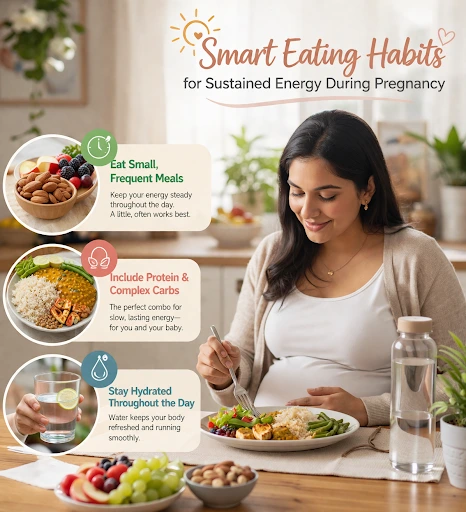
Breakfast is done, the day has just begun, and yet you already feel exhausted. It is confusing, right?
But during pregnancy, how you eat matters more than how much you eat, and that is where smart eating habits in pregnancy make a difference.
Let’s help you out:
- Eating Small, Frequent Meals
During pregnancy, your body needs a constant supply of food, not long gaps between meals.
Instead of waiting until you feel extremely hungry, keep your energy “topped up” throughout the day.
- Fruits,
- A handful of nuts,
- A light meal in between keeps your body fuelled.
Small, frequent meals help you avoid that sudden drop in energy and keep you feeling steady and active.
- Include Protein and Complex Carbohydrates
The meals during pregnancy need to do more than just fill you—they need to nourish your baby’s development too.
Think of your meals like a power combo. When you add protein (like eggs, paneer, or dal) with complex carbs (like roti, brown rice, or oats), your body gets slow and steady energy.
- Staying Hydrated Throughout the Day
Sometimes, that “tired feeling” isn’t hunger; it is dehydration.
During pregnancy, even mild dehydration can make you feel more tired than usual.
Imagine going hours without water and expecting your body to function at its best. Sipping water, coconut water, or fresh fluids throughout the day keeps you refreshed and helps your body work smoothly.
Foods That Boost Energy During Pregnancy
Feeling low on energy even after eating properly?
That is where the right food choices matter. Following the right pregnancy nutrition tips can help you stay active, prevent deficiencies, and support your baby’s development.
| Pregnancy Nutrition Tips | How These Foods Help |
| Iron-rich foods for pregnancy to prevent anaemia | Foods for energy in pregnancy, including spinach, beetroot, dates, and jaggery, help improve iron levels, preventing weakness and fatigue caused by anaemia. |
| Fresh Fruits and Vegetables for Vitamins | Seasonal fruits and vegetables provide essential vitamins and antioxidants that boost immunity, improve digestion, and stabilise energy levels. |
| Healthy Fats for Brain and Energy Support | Nuts, seeds, ghee, and healthy oils provide long-lasting energy and support your baby’s brain development while keeping you fuller for longer. |
For a more personalised approach, consulting Dt. Uma Bajoria, a trusted pregnancy nutritionist in Kolkata, can help you choose the right foods based on your body’s needs and your pregnancy stage.
Snacks and Meal Timing Tips

You open the kitchen cabinet thinking you’re just “a little hungry”and suddenly, nothing feels right.
Biscuits don’t satisfy, fruits feel too light, and skipping them isn’t an option either. That is when it hits you during pregnancy, it is not about eating more, it is about choosing smarter snacks that actually keep you full, energised, and feeling good.
With help from Dt. Uma Bajoria, a pregnancy dietitian in Kolkata, suggests choosing options that truly support your energy.
- Quick, Nutrient-Dense Snacks
- A handful of nuts and seeds (almonds, walnuts, flaxseeds) for healthy fats and protein
- Fresh fruits with peanut butter or yoghurt (use pasteurised products) for a mix of vitamins and protein
- Well-cooked boiled eggs or fresh paneer cubes for a quick protein boost
- Roasted chana or makhana as light yet filling snack options
- Pair iron-rich snacks with vitamin C foods (like citrus fruits) to improve absorption
- Timing Meals to Avoid Energy Slumps
- Eat every 2–3 hours to maintain steady energy levels
- Start your day with a balanced breakfast including protein and complex carbs
- Keep small snacks between major meals to avoid long gaps
- Don’t skip meals, especially when you feel low on energy
- Avoid tea or coffee immediately after meals, as it can affect iron absorption
- Avoiding Calories
- Limit sugary snacks like cakes, pastries, and packaged juices
- Avoid fried and overly processed foods that cause energy crashes
- Cut down on soft drinks and high-sugar beverages
- Choose whole foods over packaged snacks whenever possible
- Read labels to avoid hidden sugars and unhealthy fats
Lifestyle Tips to Complement Smart Eating
You plan your meals perfectly, but energy dips still happen because what you do between meals matters just as much.
| Habit | How It Helps You Stay Energised |
| Light Exercise for Increased Energy | Gentle activities like walking or prenatal yoga improve blood circulation, reduce fatigue, and keep your energy levels steady throughout the day. |
| Adequate Rest and Sleep | Proper sleep allows your body to recover, supports your baby’s development, and prevents constant tiredness or burnout. Short naps can also help recharge you. |
| Stress Management Techniques | Simple practices like deep breathing, meditation, or listening to calming music help lower stress levels, keeping both your mind and body relaxed and balanced. |
Simple changes, powerful energy shifts
Some days during pregnancy feel light and easy, and some feel unexpectedly exhausting, but the right nutrition and lifestyle choices can truly change how you experience both. From choosing smarter snacks to timing your meals well and building gentle daily routines, you can keep your energy far steadier than you might expect.
Ready to feel more in control of your energy during pregnancy? Contact Dt. Uma Bajoria, a pregnancy nutritionist in Kolkata for a personalised plan that fits your routine.
Visit her clinic or contact her at +91 9830614147 today.
People Also Ask
- What to eat during pregnancy to boost energy?
Starchy foods give your body steady energy while also providing essential vitamins and fibre. They help you stay full for longer without adding too many calories. Proper options include bread, potatoes, rice, pasta, cereals, oats, noodles, millet, maize, yams, and cornmeal.
- What should a pregnant woman eat to fight tiredness?
Focus on nutrient- and protein-rich foods like low-fat milk, yoghurt, beans, chicken breast, or peanut butter to keep your energy steady. Avoid relying on sugary snacks or energy drinks for a quick boost.
- Which trimester is the diet most important in?
Nutrition in the first trimester plays an important role in the early development and formation of your baby’s organs. As pregnancy progresses, your diet becomes just as important for supporting overall fetal growth and healthy brain development.
- What week is fatigue the worst in pregnancy?
Fatigue is most common in the first trimester due to hormonal changes and placental development. Energy levels often improve during the second trimester, between weeks 13 and 28.