

PCOS is one of the most common hormonal disorders, affecting 10–20% of women of reproductive age.
You make better choices, cutting sugar, improving your diet, staying consistent with medications, and managing stress, yet your periods remain irregular, your weight doesn’t change, and fatigue persists.
When you’re doing everything right and still not seeing results, it can feel confusing and discouraging. So where is the gap?
Here, you’ll discover what could be standing in your way and the simple yet effective changes that can transform how you manage PCOS.
Why Your Current PCOS Diet Is Not Delivering Results
A PCOS diet is not just about eating healthy; it is a structured nutritional approach aimed at correcting the underlying hormonal and metabolic imbalances linked to the condition. Instead of focusing solely on calorie control, it works to improve how your body responds to food.
The Missing Link in Your Diet Strategy
Most diets focus on cutting calories, but the missing link in PCOS is how your body processes food. The priority should be stabilising insulin levels, as insulin resistance is common in PCOS.
This is where including low glycaemic index (GI) foods becomes important, as they release energy slowly and help prevent sudden blood sugar spikes.
Another factor is managing chronic inflammation
A diet rich in anti-inflammatory foods can help reduce the low-grade inflammation often associated with PCOS, which may otherwise worsen symptoms over time.
When insulin levels are stable and inflammation is controlled, it becomes easier to support overall hormonal balance. This plays a role in managing concerns such as acne, weight gain, and irregular periods.
A balanced approach that includes fibre-rich foods, lean proteins, and healthy fats further supports metabolism. It helps you feel fuller for longer, reduces unnecessary cravings, and promotes sustainable weight management without relying on extreme or restrictive diets.
Why Standard Diet Plans Often Fail
What works for one person may not work for another.
A generic approach rarely works. The best diet for PCOS management depends on your body type, lifestyle, and symptoms.
Hidden Factors That Slow Down Progress
| Factor | Impact on Your Body |
| High sugar intake | Spikes insulin levels |
| Poor meal timing | Triggers cravings |
| Lack of protein | Slows metabolism |
| Processed foods | Increases inflammation |
Everyday Food Choices That May Be Holding You Back
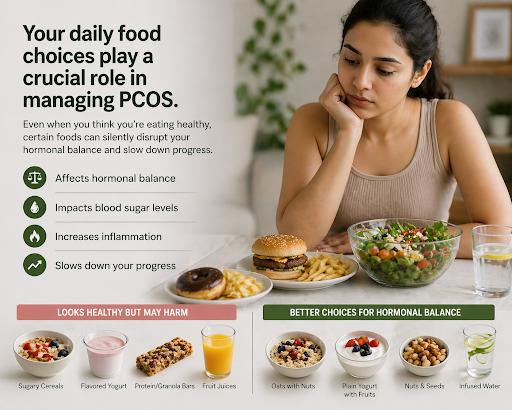
Understanding foods to avoid in PCOS can help you make smarter decisions.
Common Ingredients That Disrupt Balance
- Refined flour (maida)
- Sugary beverages
- Deep-fried foods
Packaged Foods and Their Hidden Effects
Most people enjoy packaged foods for their convenience and taste. But have you ever wondered what they might be doing to your body, especially if you have PCOS?
| Food Type | Hidden Issue |
| Breakfast cereals | High sugar content |
| Flavoured yogurt | Added sweeteners |
| Protein bars | Processed ingredients |
| Fruit juices | Lack of fibre |
Misleading “Healthy” Options
Many so-called healthy choices, like fruit juices or low-fat products, can still spike insulin levels and slow your progress.
| “Healthy” Option | Why It’s Misleading for PCOS | Better Alternative |
| Flavoured yogurt | High added sugar spikes insulin | Plain yoghurt with fruits |
| Granola bars | Loaded with hidden sugars & syrups | Nuts and seeds mix |
| Fruit juices | No fibre causes sugar spikes | Whole fruits |
| Brown bread (packaged) | Often refined flour with colouring | Whole-grain or multigrain roti |
| Diet snacks (low-fat) | High in preservatives & sugar substitutes | Fresh homemade snacks |
| Breakfast cereals | Refined carbs + added sugar | Oats or millets |
What Actually Supports Better Results for PCOS
Instead of restrictive diets, focus on building sustainable eating habits.
Building Balanced Meals That Work
- Protein (eggs, paneer, chicken)
- Healthy fats (nuts, seeds)
- Complex carbohydrates (millets, whole grains)
Choosing the Right Types of Carbohydrates
| Carb Type | Better Choice |
| Refined carbs | Whole grains |
| High GI foods | Low GI foods |
| Sugary snacks | Natural alternatives |
Including low glycemic index foods for PCOS helps maintain stable blood sugar levels.
Supporting Your Body with the Right Nutrients
- Omega-3 fats reduce inflammation
- Fibre improves digestion
- Protein helps control cravings
Structuring Your Daily Meals the Right Way
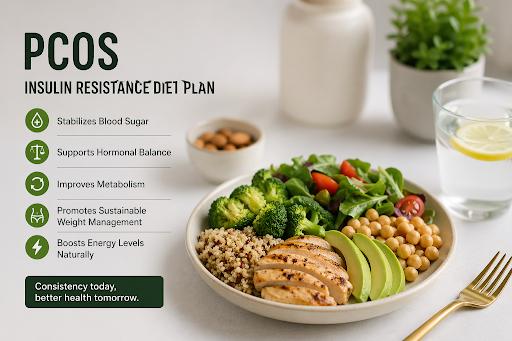
Consistency matters more than extremes. A PCOS insulin resistance diet plan helps regulate blood sugar, balance hormones, and support metabolism through a sustainable daily eating routine.
To create a strong daily structure, focus on:
- Eating meals at regular intervals
- Avoiding long gaps that trigger cravings
- Including balanced nutrients in every meal
Starting Your Day with the Right Foods
Your breakfast directly impacts how your body responds for the rest of the day. Eating a well-balanced breakfast, rich in protein and fibre, helps stabilise blood sugar levels and supports better hormonal control.
This is an important part of a PCOS diet plan for irregular periods, as stable glucose levels help regulate the cycle.
A PCOS-friendly breakfast should include:
- Protein sources like eggs, paneer, or Greek yoghurt
- Fibre-rich foods such as oats, fruits, or seeds
- Healthy fats like nuts or flaxseeds
Skipping or eating a high-sugar breakfast can lead to sudden energy crashes and increased cravings.
Planning Balanced Meals
For long-term results, your main meals should be simple, balanced, and easy to maintain. Complicated diet charts often fail because they are not practical in daily life.
A realistic PCOS-friendly meal plan by Dt. Uma Bajoria in Kolkata focuses on nourishment rather than restriction. It supports both metabolic health and hormonal balance without making your diet feel overwhelming.
Your meals should ideally include:
- Home-cooked food to avoid hidden sugars and preservatives
- Seasonal vegetables for better nutrient intake
- A balance of carbohydrates, protein, and healthy fats
- Include low glycaemic index foods
Over time, this balanced approach supports:
- Better digestion
- Reduced cravings
- Improved hormonal stability
Sample Meal Structure
| Meal | Example |
| Breakfast | Oats with nuts/eggs & toast |
| Lunch | Brown rice + dal + sabzi |
| Dinner | Roti + paneer/chicken |
| Snacks | Nuts, roasted chana |
Managing Hunger with Smarter Snack Choices
- Avoid long gaps between meals
- Choose protein-rich snacks
- Stay hydrated
Dt. Uma Bajoria, a PCOS dietitian in Kolkata, is here to help you move away from guesswork and follow a structured, practical plan that actually works for your lifestyle.
Can Lifestyle Changes Alone Make a Difference
Many people ask: ‘How to reverse PCOS naturally with diet?’, but the answer is more nuanced.
Understanding What Improvement Looks Like
Diet can help:
- Improve insulin sensitivity
- Support weight management
- Regulate menstrual cycles
Setting Practical and Realistic Expectations
- Results take time
- Consistency matters more than perfection
- Lifestyle + diet together bring results
Stop Following Random Diets and Start Fixing Your PCOS Right
Managing PCOS is not about trying more diets; it is about following the right approach consistently. Most people struggle because they focus only on eating less, while ignoring how their body responds to food.
With proper guidance from Dt. Uma Bajoria, a PCOS dietitian in Kolkata, can help you identify what your body truly needs and follow a plan that delivers sustainable results.
Call +9830614147 to book a consultation today.
People Also Ask
1. Why is my PCOS diet not working?
Most PCOS diets fail because they focus only on calorie reduction and ignore insulin resistance and hormonal imbalance. Without addressing these root causes, results remain slow or inconsistent.
2. What is the best diet for managing PCOS effectively?
The best diet for PCOS focuses on low-glycaemic index foods, balanced meals, and anti-inflammatory choices. It should include protein, fibre, and healthy fats to support hormonal balance and stable blood sugar levels.
3. How long does it take to see results from a PCOS diet?
PCOS results take time, as the body needs to adjust hormonally and metabolically. With a consistent and personalised approach, noticeable improvements can usually be seen within a few months.
4. What foods should be avoided in a PCOS diet?
Foods high in refined sugar, processed ingredients, and unhealthy fats should be limited in PCOS. These include sugary drinks, packaged snacks, refined flour products, and deep-fried foods, as they can worsen insulin resistance and inflammation.