
Should meals be completely vegetarian, or should non-veg be included sometimes?
Most people are confused about which diet to follow and how it will help them. People are confused that if they follow a vegetarian diet, they can’t function properly. This happens due to lifestyle and social media.
Some people say that vegetarian food is lighter and healthier for the body. Another says that following a mixed diet is essential for strength and daily energy.
To clear up confusion for people, this blog will surely help you make choices based on varied information rather than on unverified social media facts.
Vegetarian Diet
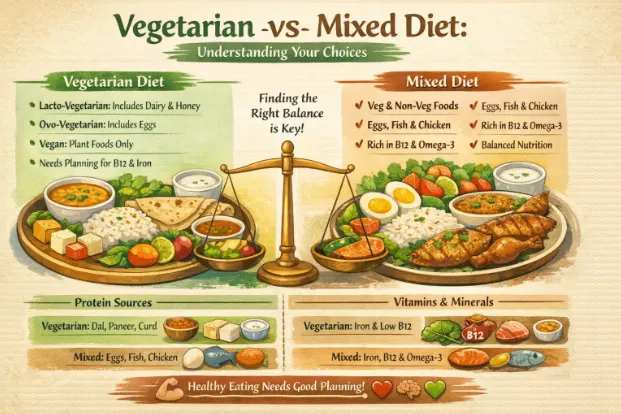
A vegetarian diet mainly consists of plant-based foods. It may include dairy products and sometimes eggs, depending on preference. This eating style is common in many Indian households.
Different Types of Vegetarian Diets Explained Simply
Vegetarian diets vary by the food groups included and daily choices.
- A lacto-vegetarian diet includes dairy products and honey.
- An ovo-vegetarian diet excludes all animal-based foods except for eggs.
- Vegan diets avoid all animal-based foods completely
- Plant-based diets focus mostly on vegetables and whole grains
Each type needs proper planning to meet daily nutrition needs.
Common Indian Vegetarian Foods and the Nutrients They Provide
Indian vegetarian meals offer variety, comfort, and familiarity daily.
- Dal and legumes provide steady plant-based protein
- Vegetables support digestion and help maintain fullness
- Fruits provide natural energy throughout the day
- Dairy supports strength and bone health
A mixed diet includes both non-vegetarian and vegetarian foods, which feels heavier sometimes, so is it actually healthier? This doubt often appears. This is where consulting an experienced dietician in Kolkata helps you make sense of your food choices and build a diet that supports your energy, digestion, and long-term health.
Let’s help you out:
Mixed Diet
A mixed diet includes both vegetarian and non-vegetarian items. It combines plant foods with eggs, fish, or meat. This eating pattern is common in many Indian households.
Common Foods in Everyday Indian Mixed Diet Meals
- Vegetarian foods such as vegetables, dal, and rice form the basis of the daily meal.
- Eggs are eaten regularly in many households across different age groups.
- Fish is often cooked in light gravies with vegetables and rice.
- Chicken is usually eaten occasionally along with roti, sabzi, or dal.
- Curd and paneer support a balance between vegetarian and non-vegetarian meals.
Nutritional Value of Mixed Diets
A mixed diet offers nutrients from both plant and animal food sources. This combination helps improve balance when meals are planned properly.
- Eggs provide easy protein without causing heavy digestion issues
- Fish supports strength while remaining lighter on the stomach
- Chicken supports higher protein needs for active lifestyles
- Dal and legumes add plant-based protein and daily satiety
- Vegetables support digestion and fibre intake
- Dairy adds calcium, strength, and daily comfort to meals
Protein Quality and Daily Protein Intake
Protein supports strength, repair, and smooth daily body activity.
- Dal provides steady protein in vegetarian diets when eaten in proper portions
- Paneer and curd support vegetarian protein intake for daily strength
- Eggs provide easily absorbed protein in mixed diets
- Fish and chicken meet higher protein requirements in mixed diets
- Low protein intake often causes weakness and frequent hunger
Vitamins and Minerals
Small nutrients quietly affect daily energy levels and mental focus.
- Iron from plant foods supports stamina, but is absorbed more slowly in vegetarian diets
- Iron from non-veg foods absorbs better in mixed diets
- Vitamin B12 is often low in vegetarian diets without planning
- Vitamin B12 is more easily available in mixed diets
- Omega-3 supports overall wellness and is higher in fish-based diets
- Both diets may show deficiencies without proper food planning
Let’s summarise the difference between a vegetarian and a mixed diet
| Factor | Vegetarian Diet | Mixed Diet |
| Protein sources | Dal, paneer, curd | Eggs, fish, chicken |
| Protein absorption | Moderate, needs combinations | Easier, smaller portions |
| Vitamin B12 | Often low without planning | Better availability |
| Iron absorption | Lower | Higher |
| Fiber intake | Naturally high | Depends on vegetables |
| Digestion comfort | Generally lighter | Cooking-dependent |
Which Diet Is Better for Heart Health?

Heart health depends more on daily habits than food labels alone. Cooking style matters more than whether a meal is vegetarian or non-vegetarian.
Saturated Fats, Cholesterol, and Inflammation
Excess oil and frequent frying affect heart health significantly over time. Packaged and processed foods increase daily intake of unhealthy fats. Moderation in food choices improves long-term heart health outcomes.
Heart-Friendly Vegetarian Food Choices
Plant-based foods naturally support heart wellness and daily comfort.
- Vegetables reduce heaviness after meals and support digestion.
- Fruits support freshness, hydration, and balance.
- Nuts help when eaten in moderation and proper portions.
Weight Loss and Fitness – Which Diet Works Better?

Weight goals depend more on routine and portion control than on food type. No single diet consistently guarantees results for everyone.
Calorie Density, Portion Size, and Feeling Full
Foods differ in how filling they feel after eating.
- Fibre-rich foods increase fullness naturally for longer periods.
- Protein reduces frequent hunger between meals.
- Balanced meals reduce unnecessary cravings and overeating.
How a Vegetarian Diet Can Support Weight Loss
Vegetarian meals can support weight loss effectively when planned properly.
- Dal and vegetables keep meals satisfying and filling.
- Curd helps control appetite and supports digestion.
- Portion awareness helps prevent excess daily calorie intake.
Mixed Diet for Muscle Gain and Higher Protein Needs
Some fitness goals require consistently higher protein intake.
- Eggs support muscle recovery after physical activity
- Fish supports lean strength and repair
- Chicken supports muscle building when consumed in controlled portions
You have your various health goals set. Let’s make it simple for you to understand which diet suits your goal better :
| Health Goal | Vegetarian Diet | Mixed Diet |
| Weight loss | Works with portions | Works with lean proteins |
| Muscle strength | Needs careful planning | Easier protein intake |
| Daily energy | Stable with balance | Stable with moderation |
| Digestion comfort | Often lighter | Cooking-dependent |
| Heart health | Naturally supportive | Supportive of lean choices |
Gut Health and Digestion – How Food Choices Matter
Digestion affects comfort, mood, and daily energy levels. Poor digestion often causes bloating or heaviness.
Fibre Benefits in Vegetarian Diets
Fibre supports smooth digestion and bowel movement.
- Vegetables improve regular bowel movement
- Fruits reduce stomach discomfort
- Whole grains support gut health
Fermented Foods, Probiotics, and Digestive Comfort
Traditional foods support digestion naturally.
- Curd supports gut balance
- Light fermented foods improve comfort
- Regular meals reduce discomfort
Common Myths About Digesting Non-Vegetarian Food
Non-vegetarian food is not always difficult to digest.
- Overeating causes discomfort
- Oily cooking slows digestion
- Late meals worsen bloating
Disease Prevention – What Do Patterns Show?
Diet supports long-term health patterns and stability. Daily habits influence comfort and energy levels.
Vegetarian Eating Patterns and Diabetes, PCOS, Thyroid Health
Plant-based meals support a better balance.
- Fibre supports blood sugar control
- Regular meals improve stability
- Portion control prevents imbalance
Mixed Diet and Overall Metabolic Balance
Mixed diets can also support metabolic balance.
- Protein supports muscle strength
- Balanced meals prevent fatigue
- Planning prevents excess intake
Impact of Processed Foods in Both Diet Types
Processed foods create problems regardless of diet type.
- Packaged snacks disturb energy levels
- Sugary foods affect balance
- Fresh foods support wellness
Which Diet Is Easier to Follow Long-Term?
A diet feels easier when it fits daily routine and personal food comfort. If meals feel forced, consistency becomes difficult over time. The best diet is one that feels natural, enjoyable, and sustainable daily.
Connect with a trusted lifestyle management consultant and dietitian in Kolkata.
Call Dt. Uma Bajoria at +91 9830614147 for personalised nutrition guidance today. Visit her clinic for a diet plan that fits busy daily routines.
People Also Ask (FAQs)
- Is non-veg necessary for strength?
Strength depends on adequate protein intake, not vegetarian or non-vegetarian food alone.
- Can a vegetarian diet provide complete protein?
Vegetarian diets provide complete protein when foods are combined properly.
- Which diet suits thyroid or PCOS better?
Both diets work when meals are balanced and spaced regularly.
- Is fish healthier than chicken?
Fish provides lighter digestion benefits, while chicken offers higher protein content.
- Which diet works better for long-term health?
The best diet is one that remains balanced and sustainable over time.