
It’s 9:10 pm, and you finally reach home after a tiring office day. Lunch was missed, water intake remained low, and energy continued to drop. Dinner becomes the only real meal, yet heaviness follows. You wonder why eating normally still leaves you exhausted and causes you to gain weight almost every working day.
This happens because traditional meal patterns are beginning to fall short in modern lifestyles. This blog will give you an idea about how traditional meal patterns may struggle in modern lifestyles and what simple changes can improve energy, digestion, and weight control.
Let’s start with a simple explanation.
What is a Traditional Indian Meal?
Traditional Indian meal patterns are built around fixed routines. These routines were designed for a time when daily life looked very different.
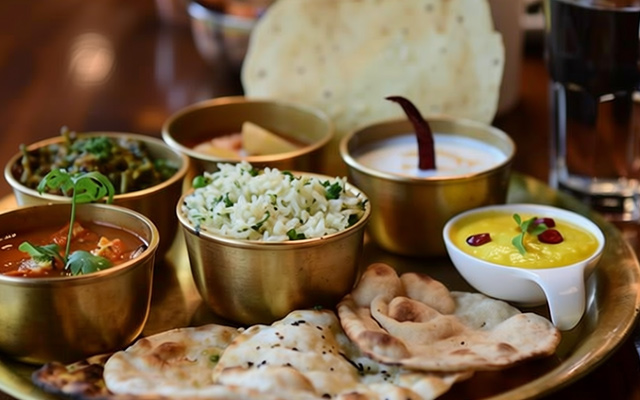
The meal involves a vibrant, flavorful spread featuring a balance of spices, often served as a “Thali” (platter) with various dishes like dal (lentils), rice, breads (roti, naan), vegetable curries, and sweets (Gulab Jamun)
How traditional patterns were originally designed
Earlier lifestyles involved walking, physical work, and early sleep. Meals were spaced naturally, and energy was burned through movement. Food worked as fuel, not storage.
What changed without us noticing
Today’s routine includes long periods of sitting, screen fatigue, irregular meals, and stress eating. The same meal timing now creates an imbalance instead of nourishment.
Why does three meals a day no longer work for many people?
Three meals a day assumes steady hunger and predictable energy use. Modern routines rarely support that rhythm anymore.
The idea of breakfast–lunch–dinner worked when hunger cues were consistent. Now, meetings replace meals, snacks replace hunger, and dinner becomes overloaded. That’s exactly why three meals a day doesn’t work for many professionals today.
The problem isn’t frequency, it’s structure
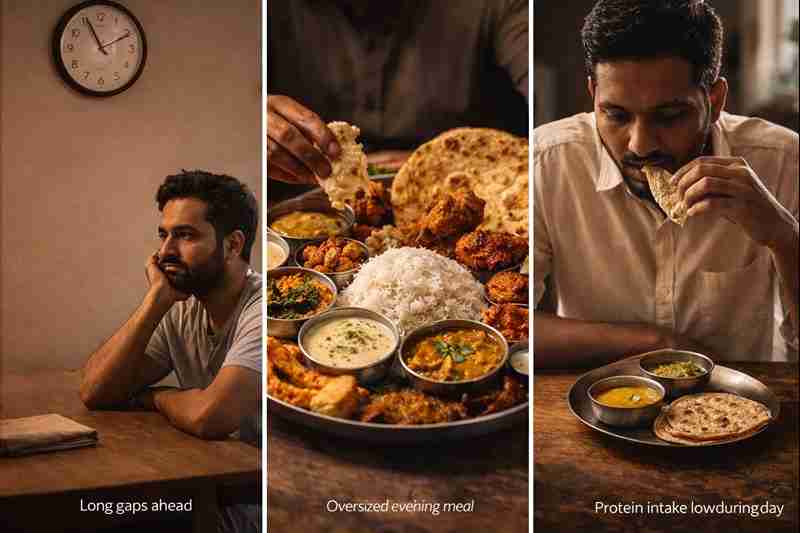
- Long gaps increase hunger intensity
- Evening meals become oversized
- Protein intake stays low during the day
What usually goes wrong
Skipping lunch leads to heavy dinners. Heavy dinners disturb sleep. Poor sleep increases cravings the next day. The cycle repeats quietly.
How does modern lifestyle impact metabolism and weight gain?
Modern lifestyle slows metabolism through inactivity and stress. This makes weight gain easier, even with home-cooked meals.
When calorie intake doesn’t match energy usage, the body adapts by storing fat. Over time, this contributes to concerns about insulin resistance, even among non-diabetics.
Sedentary work and sugar handling
Sitting for long hours reduces insulin sensitivity. High-carb meals without movement worsen sugar crashes and fatigue.
Stress, sleep, and hormonal disruption
Late dinners and poor sleep disrupt the balance of appetite hormones. Hunger increases while energy drops.
This is where guidance from a dietitian in kolkata becomes important to correct patterns early, not after damage occurs.
Is meal timing really as important as food choices?
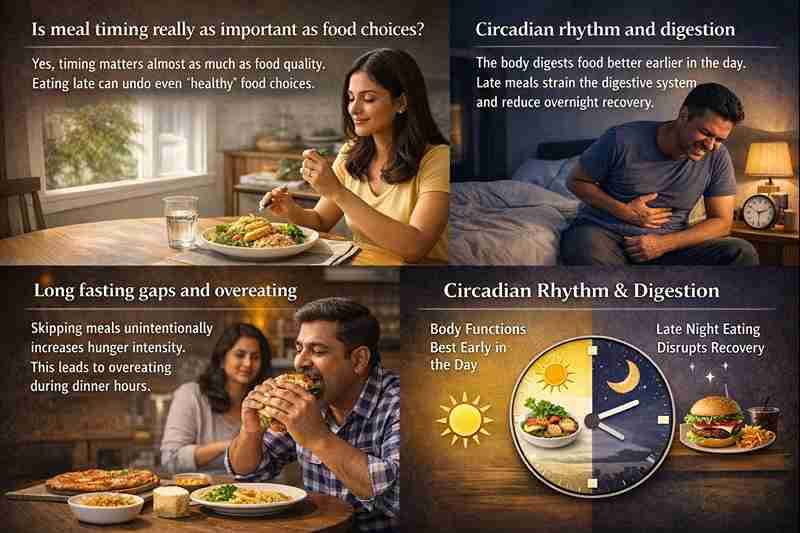
Yes, timing matters almost as much as food quality. Eating late can undo even “healthy” food choices.
Circadian rhythm and digestion
The body digests food better earlier in the day. Late meals strain the digestive system and reduce overnight recovery.
Long fasting gaps and overeating
Skipping meals unintentionally increases hunger intensity. This leads to overeating during dinner hours.
The best eating pattern for weight loss balances timing, portions, and consistency—not extremes.
Do modern eating patterns work better for busy lifestyles?
Yes, flexible eating patterns support energy and focus better. Rigid rules often fail in real office-life conditions.
Smaller, balanced meals for working professionals
Smaller meals prevent heaviness and sugar crashes. Balanced plates improve concentration and mood.
Higher protein distribution across the day
Protein at every meal stabilises energy and reduces cravings. This supports high-protein Indian meals without complicated dieting.
Does intermittent fasting suit Indian lifestyles?
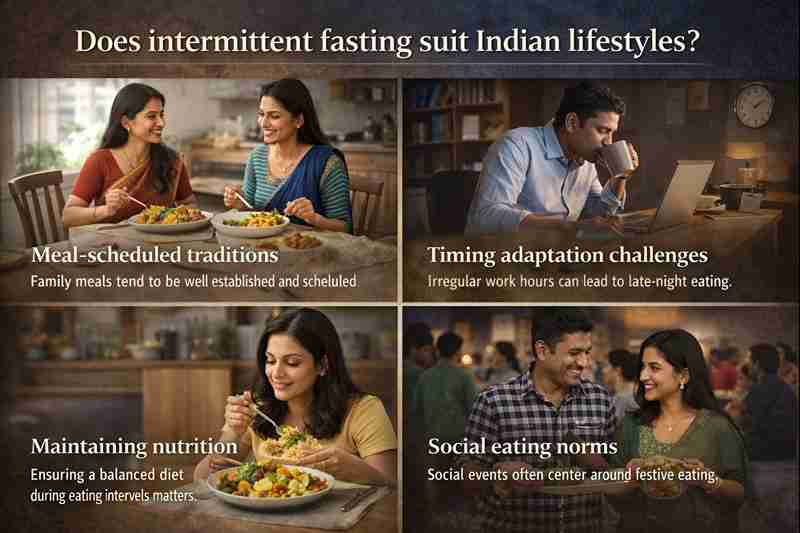
Intermittent fasting can help some people when planned properly. It is not a universal solution.
Common fasting styles explained
- 14:10 fasting (14 hours fasting, 10 hours eating)
- 16:8 fasting (a popular eating pattern where you fast for 16 hours and restrict all food/calorie intake to a consistent 8-hour window each day)
- Early-dinner-based circadian fasting (eating your last meal much earlier, like 6-7 PM, to align eating with your body’s internal clock (circadian rhythm))
These approaches are commonly used in intermittent fasting for Indian diet plans.
Who should be cautious
People with PCOS, thyroid issues, pregnancy, high stress, or poor sleep should avoid unsupervised fasting. A personalised approach works better.
What should replace traditional meal patterns today?
Modern meal models focus on balance, not restriction. They prioritise energy, digestion, and sustainability.
Traditional vs Modern Indian Eating Pattern
| Factor | Traditional Pattern | Modern Pattern |
| Meal timing | Fixed by the clock | Routine-based |
| Carbohydrates | Very high | Controlled |
| Protein | Low | Spread across meals |
| Dinner | Late and heavy | Early and light |
| Energy | Frequent crashes | Stable |
Healthier breakfast ideas
- Eggs with vegetables
- Paneer bhurji with salad
- Curd with seeds and nuts
These support the metabolic health diet goals in India.
Smart Indian lunch options
- Roti with sabzi and protein
- Dal with controlled rice portions
These fit comfortably and practically into a low-carb Indian diet plan.
Can small food swaps really improve energy and weight control?
Yes, small swaps create noticeable long-term results. They reduce calorie overload without emotional restriction.
Let’s give you a simple idea for simple indian food swaps:
| Instead of | Choose This |
| Large rice portions | Controlled rice or millets |
| Fried snacks | Roasted chana or nuts |
| Biscuits with tea | Curd or fruit |
| Sugary drinks | Lemon water |
Why swaps work better than strict diets
Strict diets often feel exhausting and hard to maintain long-term. Food swaps, however, feel practical and familiar. Small changes reduce calories without creating stress or guilt. Swaps allow you to enjoy Indian food while gradually improving energy, digestion, and weight control.
What does a modern Indian day of eating look like?
A modern meal plan balances energy and digestion. It supports a balanced diet for busy lifestyle needs.
Sample diet plan for everyday
- Breakfast: Paneer or eggs with vegetables
- Lunch: Roti, dal, sabzi, salad
- Dinner: Soup with protein, eaten early
Weight-loss focused approach
- Higher protein
- Lower refined carbohydrates
- Early, lighter dinners
Why does personalised guidance matter more than copying diets?
Traditional Indian food is not the problem. Modern life needs better balance, smarter portions, and improved protein intake. When eating patterns match lifestyle, energy improves, digestion settles, and weight management becomes easier without extreme dieting.
If eating feels confusing or exhausting, consulting Dt. Uma Bajoria, a dietitian in Kolkata, can help simplify food choices and restore balance. Call at +91 9830614147 for expert dietary guidance today.
People Also Ask (FAQs)
Can late dinners affect long-term digestion?
- Yes, regular late eating slows digestion and disrupts sleep-related recovery.
Do high-carb Indian meals increase daily fatigue?
- Yes, excess carbohydrates often cause sugar crashes and tiredness.
Is protein important even without regular workouts?
- Yes, protein supports energy, muscle health, and appetite control.
Can intermittent fasting improve metabolic health?
- It can help some people when planned and supervised correctly.