

You’ve heard the phrase, “calories in, calories out.”
But the truth is, our bodies don’t function on a simple equation. The reason for the differing results often comes down to how our bodies process food, not just what we eat.
Even if you follow the same diet as someone else, your body may respond very differently due to factors like metabolism, hormones, gut health, and lifestyle. This is where the expertise of Dt. Uma Bajoria will help.
This blog will help you get the full picture; read on to learn in detail and discover interesting facts.
“Same Food” Doesn’t Mean “Same Biology”
Have you ever noticed how two people can eat the same meal and yet experience completely different results?
One person might burn the calories faster, while the other may store them as fat. It is not about the food itself, but how your body processes and reacts to it.
So here is what you need to know:
Your biology, such as metabolism, hormones, and gut health, plays a significant role in how your body responds to the same food.
Many people think that eating the same food as someone else will produce the same results. But the reality is, two individuals may have completely different outcomes, even if they consume the same meals.
What Results Actually Differ?
- Weight: Some bodies store fat more easily than others.
- Energy: People with faster metabolisms often feel more energised.
- Cravings: Hunger can be controlled by how the body responds to food.
- Blood Sugar: Insulin sensitivity can vary, making some people prone to blood sugar spikes.
- Digestion: Your gut bacteria and digestive efficiency play a huge role.
Why the Body Isn’t a Simple Calorie Calculator
It is easy to think that eating 2,000 calories will always yield the same results for everyone. Unfortunately, it’s not that simple. The truth is, calories are not absorbed the same way by every person. The process of digestion, metabolism, and hormone regulation is much more complex than simply counting calories.
For instance:
Even if two people eat the same meal, their bodies may absorb calories differently depending on their metabolism, gut health, and insulin response. That is why it is not just about the calories, it’s about how your body processes and uses them.
This is where working with an experienced dietitian in Kolkata, like Dt. Uma Bajoria becomes important.
The Three Big Systems Involved: Metabolism, Hormones, and Gut
Now let’s get to the heart of why your body responds to food differently from someone else’s.
Three major systems determine how food is processed in your body. These systems affect everything from how you burn calories to how much energy you have after eating.
- Metabolism:
Ever heard someone say, “I can eat anything and not gain weight”? That’s usually because they have a high metabolism.
When your metabolism is quick, your body burns calories faster, making it easier to stay slim and energised. On the other hand, a slower metabolism means fewer calories are burned, and your body might store more fat.
- Hormones:
Hormones like insulin and ghrelin (the hunger hormone) are major players. Insulin regulates how your body stores fat and uses glucose for energy.
Some people are insulin-sensitive, while others are insulin-resistant, which makes it harder for their bodies to burn fat efficiently. Ghrelin, on the other hand, controls your hunger, so the more sensitive you are to it, the more you might crave food.
- Gut Microbiome:
Yes, your gut plays a huge role. You may not realise it, but the trillions of bacteria in your gut can influence your digestion and weight. If your gut bacteria are in balance, they help break down food, extract nutrients, and absorb calories more efficiently
However, if your microbiome is out of balance, you may experience digestive issues, bloating, and even weight gain.
NEAT — The Sneaky Reason One Person Burns More Without Exercising
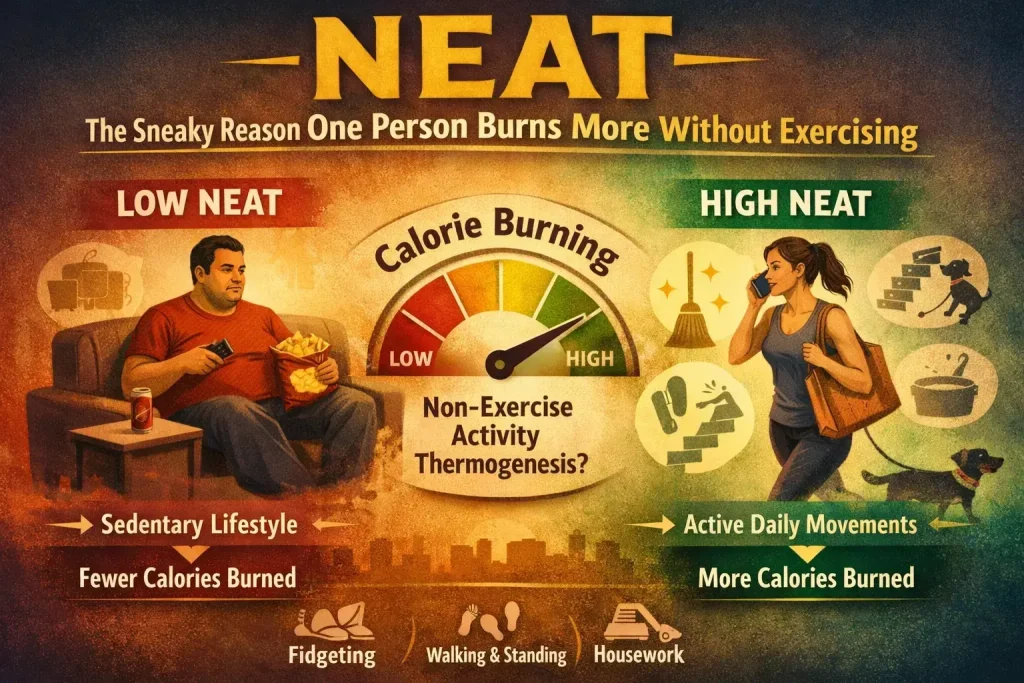
NEAT (Non-Exercise Activity Thermogenesis) is the extra calories burned from daily movements, like fidgeting or walking. It is the energy expended during activities not related to exercise, such as standing, walking, or even fidgeting.
What NEAT Is and Why It Matters
Small movements add up throughout the day. Someone who moves more, whether it’s walking around the house or fidgeting, can burn a significant amount of calories over time.
Fidgeting, Posture, Walking, and Daily Movement Differences
Did you know that someone who fidgets more during the day could burn up to 350 calories extra each day?
It’s a small change, but it adds up over time.
Why Some People Subconsciously Move Less When Eating More
When people eat more, their subconscious activity levels can decrease. Some might find themselves lounging more, which reduces NEAT and lowers calorie burn.
How Modern Sedentary Routines Amplify These Differences
Many people today live sedentary lives, especially with office work and screen time. This leads to fewer opportunities for NEAT, which contributes to weight gain over time.
Blood Sugar and Insulin Responses Can Be Totally Different
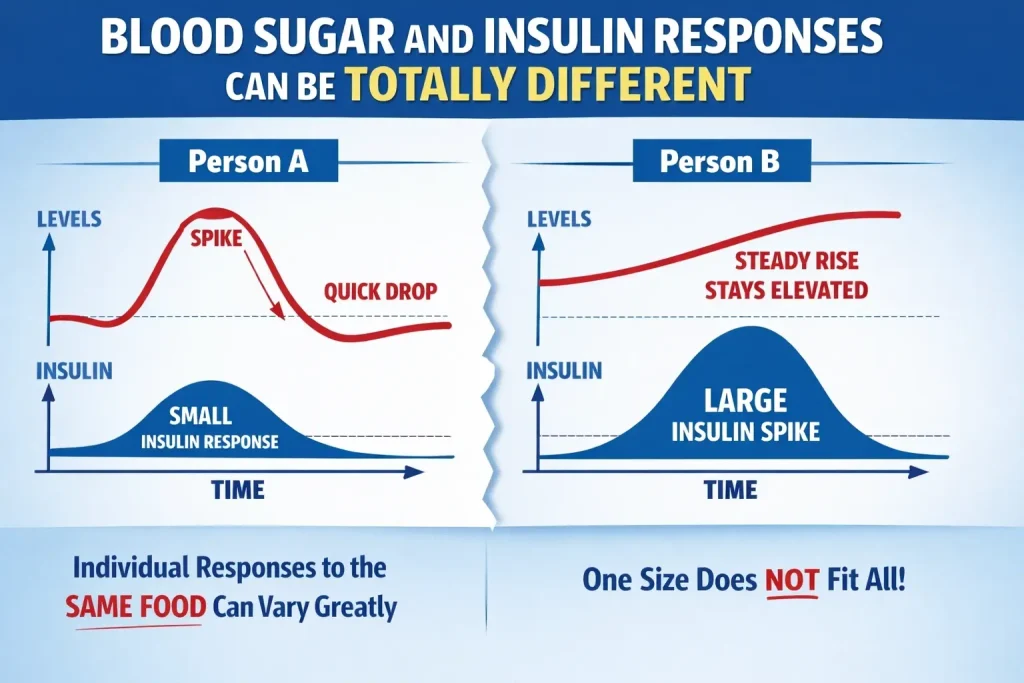
Some people experience significant blood sugar spikes after meals, while others don’t. This is due to differences in insulin sensitivity and carb tolerance.
Blood sugar levels and insulin response differ between people, even when they eat the same food. People with insulin resistance may struggle to regulate blood sugar after meals, leading to energy crashes and weight gain.
Why the Same Meal Spikes One Person and Not Another
Some people’s bodies are more sensitive to insulin, meaning they regulate blood sugar more effectively. Others may experience a spike in blood sugar, which leads to weight gain and sluggishness.
Insulin Sensitivity vs Insulin Resistance
| Concept | Description |
| Insulin Sensitivity | The body effectively uses insulin to regulate blood sugar levels, promoting efficient glucose absorption and utilisation. |
| Insulin Resistance | The body doesn’t respond well to insulin, causing sugar to build up in the bloodstream, leading to higher blood sugar levels. |
Carb Tolerance Differences and “Personal Glycemic Response”
Not everyone can tolerate carbs the same way. While one person may digest carbs without issue, another might experience significant blood sugar spikes.
Why do blood sugar spikes differ between individuals?
This variation depends on factors such as metabolism, gut health, insulin sensitivity, and activity levels. As a result, the same “healthy” meal can produce very different blood sugar responses and even impact weight differently from one person to another.
Gut Microbiome: Different Bacteria, Different Calories
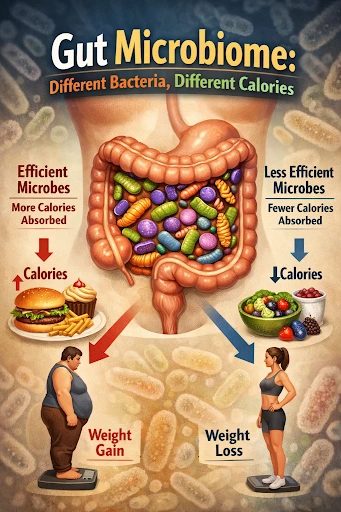
Your gut bacteria play a crucial role in digestion and calorie extraction. The more diverse your microbiome, the better your digestion. This is where gut microbiome and weight differences begin to impact your body.
The gut microbiome, the trillions of bacteria living in your intestines, affects how well you digest food and absorb calories.
How Gut Bacteria Affect Digestion and Calorie Extraction
Gut bacteria help break down food and extract nutrients. The more diverse your microbiome, the better your body can absorb nutrients.
Microbiome Differences After Antibiotics, Illness, or Diet History
Antibiotics, illnesses, and diet changes can alter gut bacteria, which can influence weight loss or gain.
Your Body Responds to Context, Not Just Calories
Focus on your unique biology and how your body responds to food rather than comparing yourself to others. Personalised nutrition plans are the key to achieving health goals.
Two people eating the same food will experience different outcomes due to their unique metabolic systems, hormones, gut health, and daily activities.
When it comes to achieving lasting health, a one-size-fits-all approach rarely works. A personalised plan designed by a dietitian in Kolkata, like Dt. Uma Bajoria considers your body’s specific needs.
Call +91 9830614147 or visit her clinic for a personalised consultation.
People Also Ask (FAQs)
- Can two people eat the same calories and gain different weights?
Yes, differences in metabolism, muscle mass, hormones, and gut health can lead to varying calorie burn and fat storage, causing different weight outcomes.
- Is metabolism the main reason people respond differently to diets?
While metabolism plays an important role, factors like hormones, gut health, and sleep also significantly influence how individuals respond to diets.
- How can insulin resistance be identified?
Signs like fatigue, cravings for sugary foods, and difficulty losing weight may indicate insulin resistance, which can be confirmed with a blood test.
- Does gut health really affect weight loss?
Yes, an imbalance in gut bacteria can hinder digestion and fat storage, while a healthy microbiome supports effective weight loss and overall health.
- What’s the fastest way to find what works for the body?
A personalised nutrition plan that considers metabolism, hormones, and lifestyle is the most effective way to discover what works best for individual needs.