

Why your body won’t stop asking for snacks
That sudden, intense urge for a spicy food or a sweet isn’t just a lack of willpower; it’s your body signalling a nutritional gap. For many busy professionals, these uncontrollable cravings are driven by blood sugar crashes and daily stress.
For a personalised plan, consulting a leading dietitian in Kolkata, like Dt. Uma Bajoria can help you take back control.
This blog will help you understand if you spend long hours at a desk, these habits often lead to serious issues like fatty liver or high cholesterol. Taming your appetite starts with eating the right foods to stay full and energised.
Cravings vs Hunger – What’s the Difference?
Many of us assume that any urge to eat is just “hunger,” but there is a massive biological difference between the two.
Understanding this distinction is the secret to managing your weight and avoiding lifestyle issues like fatty liver.
- Hunger is Physical: It builds up slowly. You might feel a slight rumble in your stomach or a dip in energy. It is your body’s calm way of saying it needs fuel; any healthy meal will satisfy it.
- Cravings are Mental: These hit you like a lightning bolt. They are sudden, urgent, and usually “specific.” You don’t just want food; you want a samosa or a specific bar of chocolate.
While physical hunger disappears once you’ve had a balanced meal, cravings often linger even after you are full. This is usually because your brain is seeking a “reward” or a hit of dopamine rather than actual nutrients.
For professionals sitting at a desk all day, mistaking a craving for hunger is the most common cause of unwanted weight gain.
If you find yourself constantly reaching for snacks, Dt. Uma Bajoria, a dietitian in Kolkata, can help you identify if your body is truly hungry or just reacting to stress.
Why Do Cravings Feel So Hard to Control?
Cravings feel uncontrollable because the body reacts to imbalance, not lack of willpower. When energy drops suddenly, the brain looks for quick relief.
Eating mostly carbohydrates with little protein causes quick energy spikes. That sudden rise is often followed by an exhausting crash.
That crash makes the body feel low, tired, or restless, and cravings appear to push energy back up quickly.
So, cravings are not a character flaw. They are a signal: energy is unstable, the routine is off, or the body needs better support. Once food balance and meal timing improve, cravings typically become less frequent and easier to manage.
Common causes of strong cravings include:
- Skipping meals or eating very little
- Low protein intake
- Long gaps between meals
- Stress and mental fatigue
- Poor sleep
Everyday Eating Mistakes That Increase Food Cravings
Breakfast gets skipped. Tea and biscuits manage the gap. Lunch got delayed again today.
Some daily habits quietly increase cravings without being noticed. These habits are common in busy city routines. These patterns confuse the body.
Hope this chart helps you:
Daily Habits and the Cravings They Trigger
| Daily Habit | What It Causes | Why It Happens |
| Skipping breakfast | Evening cravings | When the day starts without food, the body stays low on energy for hours. By evening, it pushes strong cravings to make up for the missed fuel. |
| Low-protein meals | Constant hunger | Meals without enough protein don’t keep the stomach full for long. Hunger returns quickly, even after eating. |
| Long meal gaps | Long meal gaps | Long gaps cause sudden energy drops. The brain then asks for quick fuel, usually something sweet. |
| High stress | Emotional eating | Stress increases the need for comfort. Food becomes an easy way to feel temporary relief. |
Why Do Cravings Show Up at Specific Times of the Day?
Do your cravings appear like clockwork mid-morning, late afternoon, or late at night?
They often follow a pattern tied to daily routine. This happens because the body reacts to the structure of the day. Skipped meals, long gaps, or mental exhaustion slowly build up, and cravings appear when energy finally drops.
Started Eating Healthy, But Still Feel Drained by 3:00 PM?
This afternoon slump is extremely common, especially among office-goers. Even after switching to “healthy food,” many people still feel drained by 3:00 PM. This does not mean the food is bad. It usually means the meal balance or timing is off. Often, lunch is heavy on rice or roti but low on protein and vegetables. Energy rises quickly after eating, then drops suddenly. Long work hours, mental stress, and inadequate water intake contribute to fatigue. By mid-afternoon, the body seeks quick relief: tea, biscuits, or sweets.
Reasons behind the 3 PM crash include:
- Lunch is high in carbs but low in protein
- Very small or rushed meals
- Not drinking enough water during the day
- Long sitting hours with high screen time
- Poor sleep the night before
Why Stress Makes Cravings Feel Stronger
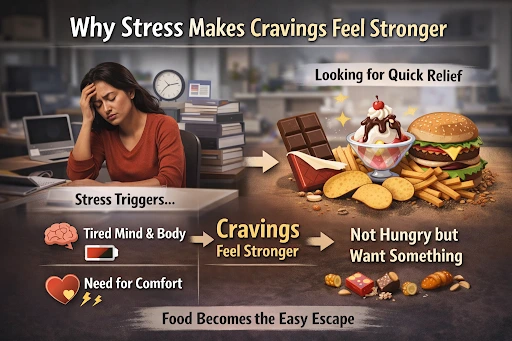
When stress builds up, both the body and the mind feel fatigued. In this state, the brain looks for quick comfort, not real hunger relief. That’s why cravings feel stronger during stressful moments, even when the stomach is not empty. Food becomes an easy escape, offering temporary relief from mental pressure.
What the image shows clearly:
- Stress overload tires the mind and body
- Energy feels low, even after meals
- The brain looks for quick relief
- Cravings increase, not because of hunger
- Comfort foods feel more tempting during stress
Core message:
Stress doesn’t create hunger; it amplifies cravings. When stress is high, food feels like the fastest way to feel better, even if the body doesn’t truly need it.
Why Late-Night Cravings Are So Common
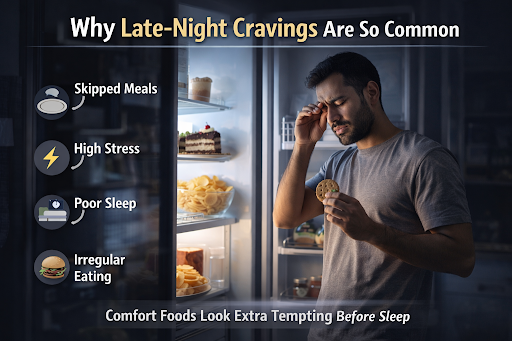
Dinner is done, but still craving food at midnight?
By the end of the day, the body is tired, stressed, and often underfed. When energy has been unstable throughout the day, the brain looks for comfort before sleep. That’s why food in the fridge suddenly looks more tempting at night, even after dinner.
To make it work better, know about why late-night cravings happen:
- Skipped or very light meals during the day leave the body under-fuelled
- High stress levels increase the need for comfort
- Poor sleep patterns disturb hunger signals
- Irregular eating timings confuse the body’s routine
- Comfort foods feel soothing when the mind is tired
What this means:
Late-night cravings are not a lack of discipline. They are a signal that the day needs better balance—regular meals, adequate protein, adequate rest, and less stress. When the body feels supported earlier in the day, nighttime cravings usually become much quieter.
Cravings Can Calm Down Without Strict Rules
Cravings don’t need punishment or extreme diets. They reduce naturally when meals are balanced, routines are steady, and the body feels supported. Once food timing, protein intake, sleep, and stress improve, cravings gradually diminish.
For personalised support, connecting with an experienced dietitian in Kolkata helps turn confusion into clarity and control.
📞 Call Dt. Uma Bajoria at +91 9830614147 for personalised nutrition guidance that fits busy daily routines.
People Also Ask (FAQs)
- Can cravings be reduced without strict dieting?
Yes. Regular meals, adequate protein intake, and better sleep often reduce cravings without strict food rules.
- Why do cravings get worse when dieting strictly?
Strict diets cause energy dips and stress, which lead the body to crave quick comfort foods.
- Do balanced meals really help control cravings?
Yes. Balanced meals help maintain steady energy and reduce sudden hunger or snack urges.
- When should professional help be considered for cravings?
Cravings feel constant, emotional, or confusing despite eating better; expert guidance helps identify the root cause.