
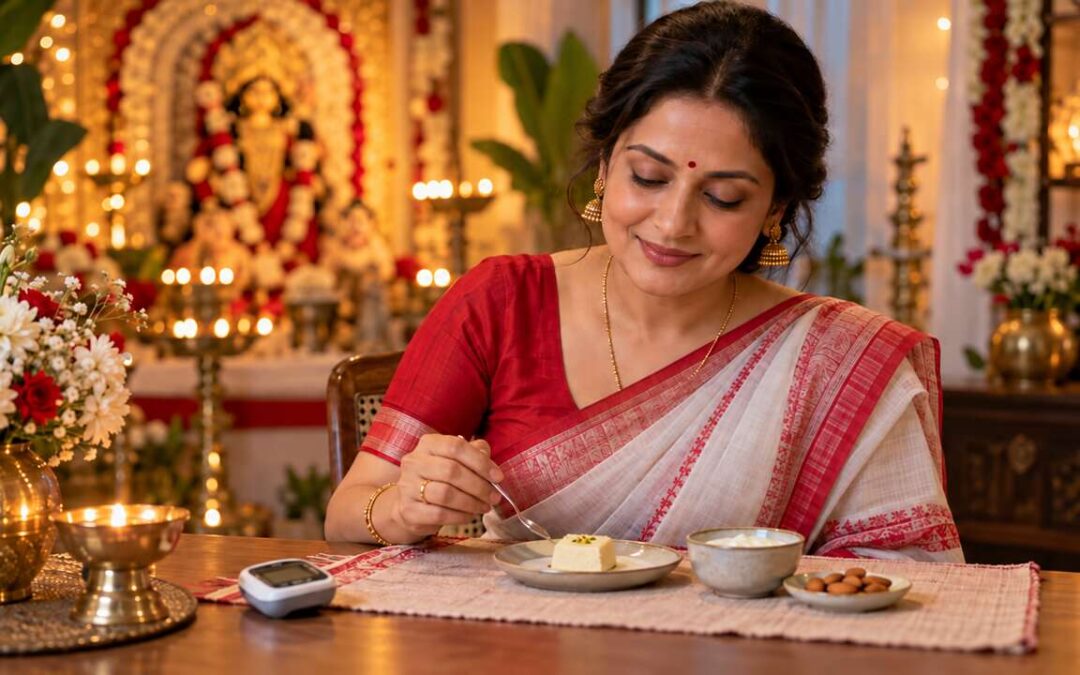
Durga Puja is not just a festival in Bengal; it is a celebration of emotions, family, traditions and, of course, food. From sandesh and rosogolla to payesh and festive treats, sweets are deeply connected with these moments. But for people managing diabetes, the festive season often comes with one common worry: whether they can enjoy Puja sweets without affecting their blood sugar.
The answer is yes, but with awareness. Managing diabetes does not mean saying goodbye to every sweet you love. It means understanding portions, timing, food combinations and how your body responds.
As a Diabetes dietitian, I help people enjoy festive foods while making choices that support their health goals. This blog covers:
- Why festive sweets can affect blood sugar levels
- How to enjoy Puja sweets with better portion control
- Smarter festive food choices for diabetes management
Why Festive Sweets Are Especially Tricky for Diabetics
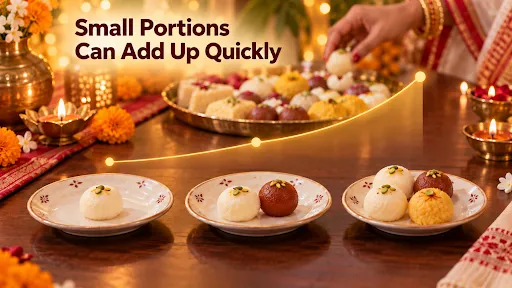
Festivals often change our regular eating patterns. Late-night pandal visits, irregular meals, social gatherings and repeated servings of sweets can make blood sugar management more challenging.
The concern is not one occasional sweet. The bigger issue is frequent intake of sugary foods along with changes in routine.
A blood sugar spike after sweets usually happens because traditional sweets contain a combination of:
- Added sugar
- Refined carbohydrates
- Milk solids
- Fats
When consumed in large quantities, these foods can quickly raise blood glucose.
What Happens to Blood Sugar After Traditional Mishti
Traditional Bengali mishti is a part of our culture, but many varieties are high in easily available carbohydrates.
When you eat sweets:
- Carbohydrates break down into glucose.
- Blood glucose levels rise.
- The body releases insulin to help move glucose into cells.
- In diabetes, this process may not work efficiently, causing higher or longer-lasting glucose elevation.
This does not mean sweets are completely forbidden. Focus on how often you eat them, how much you eat, and what else is on your plate.
Planning Ahead — The Key to a Stress-Free Puja
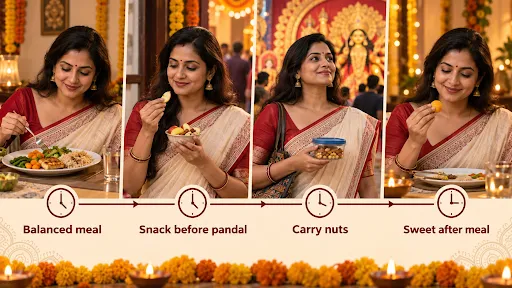
A little planning can make festive eating much easier. A balanced diabetic diet during Durga Puja does not mean avoiding celebrations. It means preparing your routine around them.
Instead of thinking, “I cannot eat anything during Puja,” think: “How can I enjoy my favourite foods while keeping balance?”
Building a Festive Eating Timeline Around Meals
One of the most useful festive eating tips for diabetes is avoiding sweets when you are extremely hungry.
Try these simple strategies:
| Situation | Better Approach |
| Visiting pandals in the evening | Eat a balanced snack before leaving |
| Receiving sweets from family | Plan when and how much you will have |
| Long gaps between meals | Carry diabetes-friendly snacks |
| Festival lunches or dinners | Balance sweets with protein and vegetables |
Eating sweets after a balanced meal is usually a better approach than having them alone on an empty stomach.
Portion Control Without Feeling Deprived
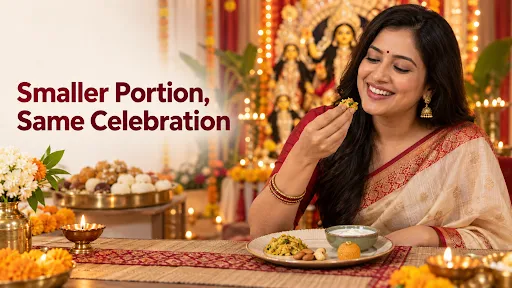
Many people believe diabetes management means giving up all festive foods. In reality, portion control for diabetics during festivals allows you to enjoy celebrations without feeling restricted.
The goal is not perfection. The goal is awareness. A smaller portion enjoyed mindfully is often better than completely avoiding sweets and then overeating later.
The Right Way to Pace Sweets Across Puja Days
Instead of having sweets multiple times every day:
- Choose your favourite sweets
- Keep portions smaller
- Avoid eating sweets at every gathering
- Space out indulgences across the festive period
For example, enjoying one small piece of your favourite mishti on a special occasion may be easier to manage than having multiple sweets throughout the day.
Remember, festivals last for a few days. Your health journey continues beyond them.
Balancing Sweets With the Rest of Your Plate
A sweet should not replace a nutritious meal.
Try balancing your plate with:
- Protein: dal, fish, eggs, chicken, paneer or curd
- Fibre: vegetables and salads
- Healthy fats: nuts and balanced cooking oils
- Carbohydrate: Controlled carbohydrate portions
A balanced meal helps reduce sudden hunger and makes it easier to avoid repeated snacking.
Choosing Smarter Sweets This Season
Festive sweets can still be a part of celebrations when you make mindful choices. When looking for low glycemic index sweets for diabetics, remember that ingredients, portion size, and overall meal patterns matter more than simply choosing a “healthy” label.
A sweet made with better ingredients can still affect blood sugar if you eat too much. The aim is to enjoy sweets occasionally while keeping your overall diet balanced.
Healthier Alternatives to Traditional Mishti
Healthy alternatives to traditional mishti include options that offer better nutritional value and controlled sweetness.
You may consider:
- Homemade sweets with less added sugar
- Nut-based treats with almonds, walnuts or seeds
- Desserts made with protein-rich ingredients like curd or paneer
- Smaller portions of traditional sweets instead of complete avoidance
However, “healthier” does not mean unlimited. Even alternative sweets contain carbohydrates and calories, so mindful portions remain important.
Sugar-Free and Low-Sugar Options Worth Trying
Many people look for sugar-free Puja sweets recipes during the festive season. While these options may reduce added sugar, they may still contain carbohydrates from ingredients like milk, flour, dates, or nuts.
Before choosing sugar-free sweets, check:
- Ingredients used
- Total carbohydrate content
- Serving size
- Sweeteners used
The best choice fits your overall diabetes management plan, not just a product labelled “sugar-free”.
Everyday Habits That Help Manage Blood Sugar This Festive Season
Festivals often disturb regular routines, but small habits can make a big difference. Knowing how to manage blood sugar during festivals helps you enjoy celebrations without losing control of your health goals.
Managing diabetes during the festive season is not about avoiding every celebration. It is about maintaining consistency wherever possible.
Staying Active Between Pandal Visits
Puja often involves long hours of sitting, travelling and late-night schedules. Adding simple movement can support better blood sugar management.
Try:
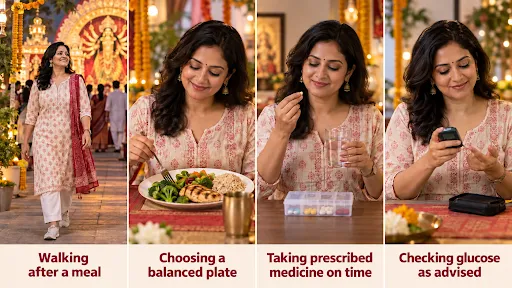
- Walking after meals
- Taking short walks between pandal visits
- Using stairs when possible
- Maintaining your regular exercise routine
You do not need intense workouts during festivals. Small movements throughout the day can help your body use glucose better.
Monitoring and Adjusting on High-Indulgence Days
Some festive days naturally involve more food choices than usual. Instead of feeling guilty, plan ahead.
Helpful steps include:
- Avoid skipping meals to “save calories”
- Keep other meals balanced if you plan to have sweets
- Follow your prescribed medication routine
- Monitor blood glucose as advised by your healthcare provider
- Return to your regular eating pattern after celebrations
One festive meal does not define your diabetes journey. Your overall habits over time matter more.
Let’s Build a Diabetes-Friendly Festive Diet Plan
A diabetes-friendly festive diet plan does not mean removing sweets, celebrations or traditional foods from your life. It means learning to include them mindfully.
The key habits are simple:
- Control portions
- Choose sweets mindfully
- Balance your plate with protein and fibre
- Stay physically active
- Maintain your regular diabetes routine
I believe food should bring happiness, not fear. With the right approach, you can enjoy the flavours of Puja while continuing to care for your health.
If you need personalised guidance, can consult me, for a practical festive nutrition plan based on your lifestyle, food preferences and health needs.
What People Also Ask
Can a diabetic have Puja sweets in moderation without harming blood sugar levels?
Yes, people with diabetes can enjoy Puja sweets occasionally in controlled portions. The impact depends on the type of sweet, quantity consumed, overall meal balance and individual blood glucose response.
What are some low-sugar alternatives to traditional Bengali mishti?
Options may include homemade sweets with reduced added sugar, nut-based treats and desserts made with ingredients that provide better nutritional value. Portion control is still important even with lower-sugar options.
How much sweet portion is considered safe for a diabetic during festivals?
No fixed portion works for everyone. The suitable amount depends on blood sugar control, medication, lifestyle and overall carbohydrate intake.
Should blood sugar be checked more frequently during the festive season?
People with diabetes should follow their regular monitoring schedule unless their healthcare provider recommends additional checks. Monitoring may be useful when eating patterns or routines change significantly.
Can festive indulgence undo weeks of consistent diabetes management?
One occasional festive indulgence usually does not undo consistent efforts. However, frequent overeating and disrupted habits may affect blood sugar control. Returning to a balanced routine is important.
Which sweets can a diabetic eat?
People with diabetes can enjoy small portions of homemade, reduced-sugar sweets, nut-based treats or lighter versions of traditional mishti. The key is choosing wisely and keeping portions controlled.