

Scrolling through social media, you may come across posts showing dramatic weight loss transformations in just a few weeks. While these results can look inspiring, they often leave people wondering: Can you lose substantial weight in a month, and how?
Healthy weight loss means shedding extra fat in a way that supports your metabolism, preserves muscle, and fits your lifestyle.
Rather than following social trends, read this blog to learn in depth about a practical approach to losing weight in a month and how a weight loss dietitian can help you understand what is ideal for your body and help you with gradual rather than overnight changes.
What “Realistic” Actually Means in Weight Loss
Realistic weight loss means setting a target that your body can achieve and maintain over time.
While rapid changes may happen initially, especially due to water loss, sustainable fat loss usually happens gradually.
A realistic approach focuses on:
- Reducing excess body fat
- Maintaining muscle mass
- Improving eating habits
- Building consistent lifestyle changes
- Supporting long-term health
The number on the weighing scale is only one part of progress. Improvements in energy levels, fitness, waist measurement and eating patterns also matter.
For example, someone with a higher starting weight may initially lose more kilograms than someone closer to their healthy range. Therefore, comparing your progress with someone else’s transformation can often create unrealistic expectations.
The Safe Rate of Weight Loss — What Experts Actually Recommend

When discussing the safe rate of weight loss, experts generally recommend gradual progress rather than aggressive calorie restriction. According to a source, losing about 0.5 to 1 kg per week is a gradual, sustainable pace for many adults.
However, this is a general guideline, not a fixed rule for everyone.
Factors that influence weight loss speed include:
- Starting body weight
- Age
- Muscle mass
- Medical conditions
- Physical activity
- Dietary habits
Healthy Weight Loss Per Week
A realistic number for healthy weight loss per week is usually around:
| Time Period | General Healthy Range |
| One week | Around 0.5–1 kg |
| One month | Around 2–4 kg |
Initial loss may vary due to water loss, hormones, medications or metabolic factors. The goal is not rapid reduction, but building sustainable habits that help maintain results.
How That Adds Up Over a Month
So, how much weight can you realistically lose in a month? For many people, losing around 2–4 kg in a month can be a realistic target when following a balanced nutrition plan and staying physically active. However, your actual progress may vary.
| Situation | Possible Weight Loss Pattern |
| Higher starting weight | May see faster initial changes |
| Mild weight gain | May progress more gradually |
| Hormonal concerns like PCOS or thyroid issues | May require a more personalised approach |
| Crash dieting | May show quick changes but is difficult to maintain |
Why Weight Loss Isn’t Linear
Reduction rarely follows a straight downward path. Understanding why weight loss slows down can help you stay consistent instead of feeling discouraged.
As your body loses weight, calorie needs, metabolism, water balance, hormones and activity levels may change. A slower phase doesn't always mean your plan has stopped working—it is often a normal part of the process.
Water Weight vs. Fat Loss
Understanding water weight vs fat loss helps explain why the weighing scale can change quickly, especially in the initial stages of a diet. Early drops may happen due to:
- Reduced carbohydrate intake
- Lower glycogen stores
- Changes in salt intake
- Less water retention
However, this does not always mean fat loss.
| Water Weight | Fat Loss |
| Changes quickly | Happens gradually |
| Affected by hydration and salt intake | Requires consistent calorie balance |
| Can fluctuate daily | Reflects long-term progress |
Weight Loss Plateau Causes
Common weight loss plateau causes include:
- Your body adapting to a lower calorie intake
- Reduced daily movement
- Loss of muscle mass
- Inconsistent eating patterns
- Poor sleep quality
- Increased stress levels
- Unrealistic calorie restriction
Instead of cutting food further, it is often better to make small adjustments, such as improving protein intake, increasing activity, or changing meal balance.
What Determines How Much You Can Realistically Lose?
The answer to how much weight you can realistically lose in a month depends on several factors. Two people following the same diet may see different results because their bodies respond differently.
Key factors include:
| Factor | How It Affects Weight Loss |
| Starting weight | People with higher body weight may see faster initial changes |
| Metabolism | Determines how efficiently your body uses energy |
| Activity level | Regular movement supports calorie expenditure and muscle maintenance |
| Hormonal health | Conditions like PCOS or thyroid issues may affect progress |
| Sleep and stress | Poor sleep and high stress can influence hunger and weight management |
| Eating pattern | Consistency and food quality impact long-term results |
A sustainable approach usually involves creating a calorie deficit for weight loss, in which your body uses more energy than it receives from food. However, the deficit should be practical and nutritionally adequate, not so aggressive that it affects energy, muscle mass or overall health.
Sustainable Weight Loss vs. Crash Dieting — Why the Number Isn’t Everything
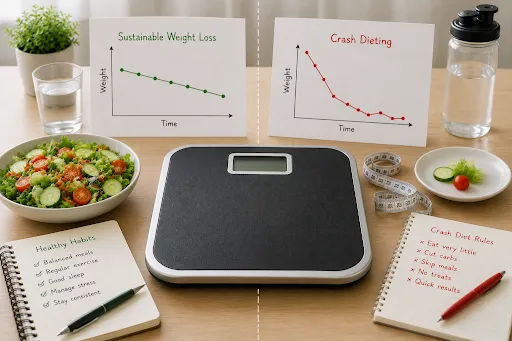
The debate around sustainable weight loss vs crash dieting often comes down to one question: do you want quick results or lasting results?
Crash diets may show rapid changes on the scale, but much of the initial loss can be water weight rather than fat. They may also increase the risk of:
- Muscle loss
- Nutrient deficiencies
- Low energy
- Increased cravings
- Regaining after stopping the diet
On the other hand, sustainable reduction focuses on habits you can continue, such as:
- Eating balanced meals
- Including enough protein
- Staying physically active
- Improving sleep quality
- Building a healthier relationship with food
A slower approach may feel less dramatic, but it is more likely to support long-term results.
Setting Realistic Weight Loss Goals for Yourself
Setting realistic weight loss goals is not about chasing a number on the scale. Here’s a practical approach:
Focus on Percentage-Based Goals
- Losing 5–10% of your initial body weight can offer meaningful health benefits for many people.
- The timeline depends on your body, habits and consistency.
Track Progress Beyond the Scale
Weighing less on the scale is not the only measure of success. Look for improvements in:
- Energy levels and stamina
- Sleep quality
- Waist measurement
- Eating habits
- Fitness and overall wellbeing
How a Dietitian Personalises Your Monthly Weight Loss Target

A dietitian-recommended weight loss plan considers your body, lifestyle and health requirements before setting goals. As a weight loss dietitian in Kolkata, I focus on creating a personalised plan that considers:
- Your current weight and health history
- Food preferences and cultural eating habits
- Medical conditions like PCOS, thyroid issues or diabetes
- Daily routine and activity levels
- Nutritional requirements
Consistency Beats Speed
Losing weight isn't about achieving the biggest transformation in the shortest time. It is about creating healthy changes that support your lifestyle and long-term goals.
Your ideal monthly target depends on your body, habits and health needs. For personalised guidance, consult me, as I’m here to help you embark on a journey toward a fitter and healthier you.
People Also Ask These Questions
1) How much weight can you lose in a month?
A realistic target for many people is around 2–4 kg per month, depending on factors like starting weight, lifestyle, health conditions and consistency. Individual results may vary.
2) Is losing 10 kg in one month realistic?
For most people, losing 10 kg in a month is not considered a realistic or sustainable goal. Very rapid weight loss may be due to water loss, muscle loss, or extreme calorie restriction.
3) What is the safest rate of weight loss?
A commonly recommended safe rate of weight loss is around 0.5–1 kg per week for many adults. However, the ideal pace depends on individual health factors.
4) Why does weight loss slow down after a few weeks?
It may slow because your body requires fewer calories after weight loss, your metabolism changes, water balance fluctuates, and your activity or eating patterns may adapt over time.
5) Can I lose weight without following a strict diet?
Yes. Sustainable loss does not require extreme restrictions. A balanced approach with appropriate portions, regular movement and healthy habits can support long-term progress.
6) How do I know if I am losing fat and not just water weight?
Fat loss happens gradually and shows up as consistent changes over time. Tracking measurements, fitness improvements, and long-term weight trends can provide a clearer picture than daily scale changes.