

What if rapid weight loss is putting more pressure on your body than you realise?
A quick drop on the scale of a weighing machine can feel motivating, but it is not always a healthy sign. Sometimes, rapid weight loss may point to poor nutrition, muscle loss, stress, or hidden health concerns.
This blog will help you understand why it happens, when to worry, and how to choose a safer weight loss approach.
Is Rapid Weight Loss Helping or Harming You?
Yes, losing weight too fast is harming you, especially when it happens without proper planning or without trying. It may not always mean fat loss. Sometimes, the body may lose water, muscle, or essential nutrients instead.
Fast weight loss becomes more concerning when it comes with:
- Weakness or dizziness
- Sudden hair fall
- Loss of appetite
- Digestive discomfort
- Irregular periods
- Poor sleep or low mood
Common Reasons Behind Losing Weight Too Fast
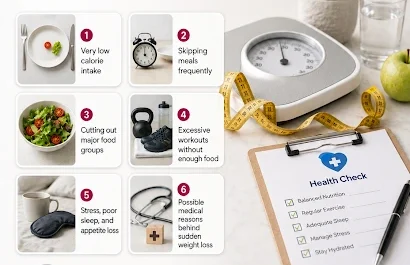
There are many reasons behind sudden weight loss. Some are related to diet and lifestyle, while others may need medical attention.
Very low calorie intake
Eating too little is one of the most common reasons for rapid weight loss. Many people reduce food portions too much, thinking it will speed up fat loss. But the body needs enough calories for daily work, brain function, digestion, and movement.
Low calorie intake may lead to:
- Constant hunger
- Irritability
- Weakness
- Poor workout recovery
- Nutritional deficiency symptoms
Skipping meals frequently
Skipping breakfast, lunch, or dinner may create a large calorie gap. At first, this may show quick weight loss. But over time, it may disturb metabolism and weight loss progress.
Meal skipping can also lead to overeating later in the day. This makes the routine unstable and difficult to maintain.
Cutting out major food groups
Completely avoiding carbohydrates, fats, or proteins is not always helpful. Each food group has a role in the body.
Carbohydrates provide energy. Protein supports muscles. Fats help with hormones and nutrient absorption. Removing any one group without proper guidance may cause imbalance.
Excessive workouts without enough food
Exercise supports fitness and fat loss. But too much exercise with too little food can create stress inside the body. The body may start using muscle for energy, especially when protein and calories are too low.
Stress, poor sleep, and appetite loss
Stress can affect hunger, digestion, cravings, and sleep. Some people eat more during stress, while others lose their appetite completely.
Poor sleep may also affect hormones related to hunger and metabolism. This can make weight changes unpredictable.
Possible medical reasons behind sudden weight loss
Unexplained weight loss should not be ignored. Sometimes, sudden weight loss may be linked to thyroid imbalance, diabetes, digestive disorders, infections, chronic stress, or other health conditions.
Dt. Uma Bajoria, a weight loss dietitian in Kolkata, advises understanding the root cause of sudden weight loss before making your diet more restrictive.
Why Fast Weight Loss Can Be Harmful
Fast weight loss can feel like progress, but the body may not always agree. If the scale is dropping while your energy, mood, or strength is dipping too, it needs a closer look. Healthy weight loss should feel sustainable, not stressful.
Know what rapid weight loss leads to:
Hair fall and nutrient deficiencies
Sudden weight loss may trigger hair fall when the body does not get enough key nutrients. This can happen due to poor intake of:
- Protein
- Iron
- Zinc
- Healthy fats
- Vitamins
Hormonal imbalance
Extreme calorie restriction can disturb hormonal balance, especially when the body stays under stress for too long. In women, it may lead to:
- Irregular periods
- Mood changes
- Fatigue
- Stronger cravings
- Low energy
Digestive issues
Sudden diet changes may affect digestion, especially when meals become too restrictive. Common triggers include:
- Low fibre intake
- Less water
- Skipped meals
- Very low food quantity
- Sudden change in eating pattern
How to Make Weight Loss Safer and More Balanced
A safer approach focuses on nourishment, consistency, and realistic progress.
Focus on fat loss, not only weight loss
The number on the scale should not be the only goal. Fat loss, better stamina, improved digestion, and stable energy matter equally.
A good plan should help clothes fit better, improve strength, and make daily life easier.
Eat enough protein with every meal
Protein helps maintain muscle and keeps hunger controlled. It should be included in every main meal.
Good protein options include:
- Eggs
- Fish
- Chicken
- Paneer
- Curd
- Dal
- Chana
- Sprouts
- Tofu
Include fibre-rich foods daily
Fibre supports digestion and fullness. It also helps control cravings.
Add fibre through:
- Seasonal vegetables
- Salads
- Fruits
- Whole grains
- Dal and legumes
- Seeds
Do not remove carbohydrates completely
Carbohydrates are not the enemy. The type and quantity matter. Smart carbohydrates support energy, mood, and workout performance.
Better options include rice in controlled portions, roti, oats, daliya, poha, millets, and sweet potato.
Keep healthy fats in controlled portions
Healthy fats support hormones, skin, hair, and fullness. But portions should be controlled. Sources may include nuts, seeds, ghee, mustard oil, olive oil, and fatty fish.
Avoid crash diets and extreme restrictions
Crash diet side effects may include weakness, cravings, hair fall, mood swings, muscle loss, and weight regain. A plan that cannot be followed for long is not a practical plan.
What Should a Balanced Weight Loss Plate Include?
| Plate Section | What to Add | Why It Helps |
| Protein | Fish, eggs, dal, paneer, curd, chicken | Supports muscle and fullness |
| Vegetables | Cooked sabzi, salad, greens | Adds fibre and nutrients |
| Smart carbs | Rice, roti, oats, daliya, millets | Gives steady energy |
| Healthy fats | Nuts, seeds, ghee, oils | Supports hormones and satiety |
Warning Signs You Should Not Ignore
Fast weight loss becomes concerning when it affects normal body functions.
- Weight keeps dropping without trying
- Constant tiredness or dizziness
- Sudden hair fall
- Irregular periods
- Poor sleep, low mood, or weakness
When Fast Weight Loss Needs a Reality Check
Fast weight loss can feel like a big win, but your body may not always agree. When food, water, and nutrition are not balanced, the body can respond with weakness, hair fall, low energy, digestive issues, and hormonal changes. These signs are not just “diet problems.” They are reminders that weight loss should make you feel healthier, not drained.
Consult Dt. Uma Bajoria, a weight loss dietitian in Kolkata, to understand your health needs and follow a balanced diet plan made for long-term health.
Call +9830614147 to book an appointment today.
People Also Ask
- Is losing weight too fast harmful for the body?
Yes, losing weight too fast can affect energy, muscle strength, digestion, hair health, and nutrition. Healthy weight loss should make the body feel active and balanced, not weak, tired, or deprived.
- How much weight loss is considered too fast?
Losing more than 0.5–1 kg per week regularly may be considered too fast for many people.
The right pace can vary, so weight loss should always match your health, diet, and lifestyle needs.
- Can quick weight loss affect periods and hormones?
Yes, sudden weight loss or extreme dieting can disturb hormonal balance and affect the menstrual cycle. Missed, delayed, or irregular periods may be a sign that the body is under nutritional stress.
- What are the warning signs of unhealthy weight loss?
Constant weakness, dizziness, hair fall, low energy, mood changes, and digestive discomfort can be warning signs. If weight drops quickly without feeling healthy or strong, it should not be ignored.