
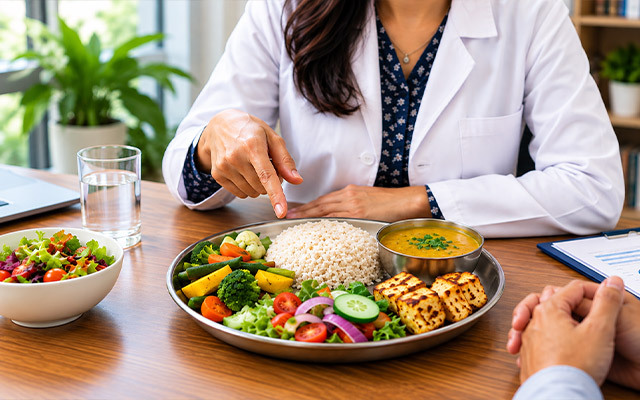
Rice is a familiar part of Indian meals, but after a diabetes diagnosis, many people wonder: “Do I need to stop eating rice completely?” The answer depends on the type, portion size, cooking method and what you eat with it.
But then which rice is suitable and in what quantities? How should we cook and consume rice? To clear your doubts, this blog explains how rice fits into a diabetes-friendly diet, covering its impact on blood sugar, smarter choices, and guidance from an expert diabetes dietitian.
Why Rice Gets a Bad Reputation in Diabetes Management
Rice often gets a bad reputation because it’s carbohydrate-rich and can raise blood glucose levels. However, you don’t always need to avoid it completely. The bigger concerns are large portions, low-protein meals, highly polished rice, and combining multiple carbohydrate-rich foods.
A balanced plate can include:
- A controlled portion
- Protein sources like dal, fish, eggs, chicken, paneer or curd
- Plenty of non-starchy vegetables
- Healthy fats in moderation
According to the ADA, people with diabetes do not need to eliminate carbohydrates. Managing the quantity, quality and balance of carbohydrates is key for better blood sugar control.
Understanding Rice and Blood Sugar Levels
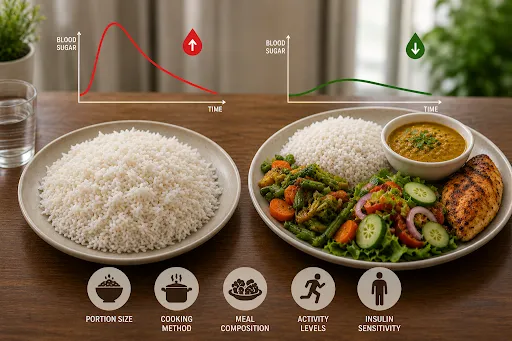
Rice’s impact on blood glucose depends on more than this food itself. Factors like:
- rice and blood sugar levels,
- portion size,
- cooking method,
- meal composition,
- insulin sensitivity and activity levels all play a role.
For example, rice eaten with vegetables, dal, and protein may affect blood sugar differently than a large serving of plain rice alone. This is why the overall meal balance matters as much as the variety of rice.
Glycemic Index of Rice
The glycemic index of rice refers to how quickly the carbohydrates in rice raise blood glucose compared with a reference food. Below is the GI of different types of rice:
| Type of Rice | Usual Glycemic Response |
| Polished white rice | Often higher due to lower fibre content |
| Brown rice | Usually lower because it contains more fibre |
| Parboiled rice | May have a slower glucose response compared with some white rice varieties |
| Red rice | Contains more fibre and nutrients compared with polished ones |
Glycemic index alone does not determine whether a food suits you. Even a moderate-GI food can raise blood sugar if eaten in large portions, so portion size matters.
Glycemic Load — Why Portion Matters More Than the Food Itself
Glycemic load considers both the quality and quantity of carbohydrates in a serving.
Simply put: Glycemic index tells you how fast a food may raise blood sugar. Glycemic load considers how much carbohydrate you actually eat.
For example:
- A small serving of rice may have a manageable effect.
- A larger plate may cause a much larger rise in blood glucose, even if the variety has a lower glycemic index.
This is why a person with diabetes should focus on:
- Type of carbohydrate
- Portion size
- Meal balance
- Blood glucose response
Brown Rice vs White Rice for Diabetes — What Actually Differs
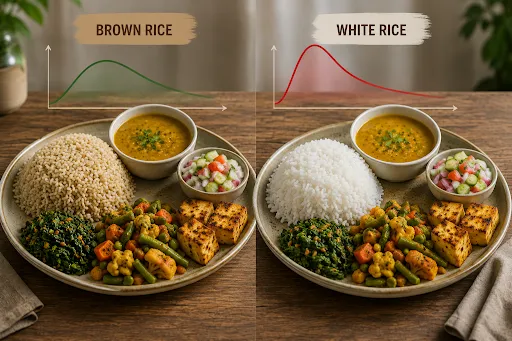
The debate around brown rice vs white rice in diabetes management is common. Here’s what differs:
| Feature | White Rice | Brown Rice |
| Processing | More processed, outer layers removed | Less processed, retains bran layer |
| Fibre content | Lower | Higher |
| Texture | Softer and quicker to cook | More chewy |
| Nutrient content | Some nutrients may be reduced during processing | Retains more natural nutrients |
However, this does not mean the whiter variety is completely off-limits.
White rice is not completely off-limits, especially in Indian households where it is a regular staple. Long-term success comes from making realistic changes rather than removing one food entirely. A balanced plate with moderate portions, along with dal, vegetables, and protein like fish or paneer, may be a better choice than brown rice without enough protein or fibre.
So, Can a Diabetic Eat Rice? The Honest Answer
Yes, people with diabetes can include rice, but portion size, variety, and meal balance matter. A practical approach is to:
- Choose controlled portions.
- Pair with protein and vegetables
- Monitor blood glucose response.
- Prefer less processed varieties when possible.
Rice alone does not determine diabetes control; the overall eating pattern and lifestyle choices matter most. A sustainable meal plan should match your health goals, food habits and routine.
Best Rice for Diabetics — What to Choose and What to Limit
The best rice for diabetics isn’t about finding a single “perfect” variety. The better choice depends on your blood sugar response, eating habits, portion size and overall meal balance.
Look for options that offer more fibre and better nutrition:
| Rice Variety | Key Benefit | What to Remember |
| Brown rice | Higher fibre as it retains the bran layer | May take longer to cook and may not suit everyone’s taste |
| Red rice | Provides fibre and natural plant compounds | Works well as part of a balanced meal |
| Parboiled rice | May have a slower glucose response than some polished rice | Portion control is still important |
| Polished white rice | Lower fibre due to processing | Larger portions may raise blood sugar faster |
For Indian households, the most suitable choice is often the one you can follow consistently. A diabetic-friendly Indian diet doesn’t require eliminating traditional foods—it focuses on smarter portion sizes, better combinations, and overall balance.
How Much Rice Can a Diabetic Eat?
The answer depends on your blood sugar levels, activity, medication, insulin use, and overall carbohydrate intake. A practical approach is to keep this food item as a part of a balanced plate:
| Plate Portion | Food Group |
| Half plate | Non-starchy vegetables like lau, beans, cauliflower and leafy greens |
| Quarter plate | Protein sources like fish, chicken, eggs, paneer, dal or chana |
| Quarter plate | Rice or another carbohydrate source |
Portion Control for Diabetics

Should you completely avoid certain foods? No, portion control is important for people with diabetes. Follow these simple steps:
- Use a smaller bowl or serving spoon for rice.
- Avoid taking multiple servings.
- Add vegetables and protein before increasing the quantity.
- Avoid combining rice with other high-carbohydrate foods like potatoes, sweets or sugary drinks in the same meal.
Carbohydrate Counting for Diabetes — A Simple Approach
Here’s a simple approach:
- Identify carbohydrate sources in your meal.
- Keep portions consistent.
- Pair carbohydrates with protein and fibre.
- Monitor your blood glucose response.
For people using insulin, carbohydrate counting may be especially useful because insulin doses may need to match carbohydrate intake. A healthcare professional can help you understand the right carbohydrate distribution for your needs.
Smart Ways to Eat Rice Without Spiking Blood Sugar
Try these practical tips:
1. Pair With Protein
Good combinations include:
- Rice + dal + vegetables
- Rice + fish curry + salad
- Rice + chicken + vegetables
- Rice + paneer curry
2. Add Fibre-Rich Foods
Fibre slows the absorption of carbohydrates.
Include:
- Vegetables
- Salads
- Pulses
- Beans
- Leafy greens
3. Avoid Eating Rice Alone
A large bowl of plain rice may cause a faster rise in blood glucose than a balanced meal. The combination matters.
4. Eat Mindfully
Eating slowly gives your body time to recognise fullness and may prevent overeating.
Other Foods That Spike Blood Sugar — What to Watch Alongside Rice
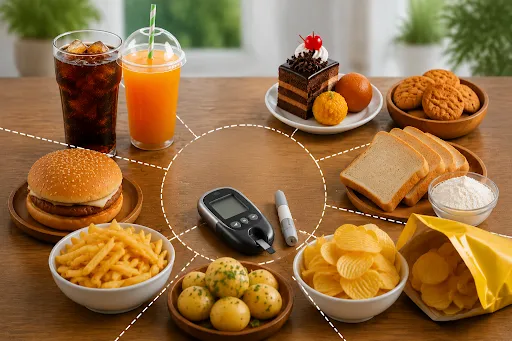
While rice often gets attention, it is not the only food that can affect blood sugar. These are some foods that also spike blood sugar.
| Food | Why It May Affect Blood Sugar |
| Sugary drinks | Provide rapidly absorbed sugar without fibre |
| Sweets and desserts | High in added sugar |
| Refined flour foods | Low fibre and quickly digested |
| Large portions of potatoes | High carbohydrate content |
| Packaged snacks | Often contain refined carbohydrates |
The key is not to label foods as “good” or “bad”. Instead, focus on how often you eat them and how they fit into your overall meal plan.
Building a Diabetes Diet Plan That Still Includes Your Favourite Foods
A practical diet plan should include:
- Your usual eating habits
- Regional food preferences
- Work schedule
- Activity levels
- Medication routine
- Blood sugar patterns
For many people in Kolkata and across India, rice is a cultural staple. A practical diabetes diet plan focuses on portion control and balanced meals, not unnecessarily eliminating familiar foods.
A personalised approach can help you understand:
- Which carbohydrates suit you better
- How much rice fits your meal plan
- How to balance traditional meals
- How to maintain stable energy levels
What to Expect From a Consultation With a Dietitian

A consultation isn’t just about getting a list of foods to avoid. I, as a diabetes educator, focus on the following during a consultation:
- Review of your medical history and blood sugar patterns
- Assessment of your current eating habits
- Guidance on carbohydrate portions
Finally, I adopt a personalised diet plan that suits your lifestyle, health conditions, and eating habits.
Rice Isn’t the Enemy, Faulty Diet Plan Is
Rice itself is not the problem. The bigger concern is eating large portions, having an unbalanced plate and ignoring overall carbohydrate intake.
With the right portion sizes, better combinations, and personalised guidance, many people with diabetes can continue to enjoy this food as part of a balanced eating pattern.
If you need help creating a practical meal strategy from a dietitian based in Kolkata, connect with me for a consultation.
Frequently Asked Questions
1) Is brown rice really better than white rice for diabetics, or is it just a market trend?
Brown rice contains more fibre because it is less processed, which may help slow the rise in blood glucose. However, portion size and the overall meal pattern matter more than choosing a single rice variety.
2) How much rice can a person with diabetes safely eat in one meal?
The amount varies depending on your blood sugar levels, activity, medication and overall diet. A controlled portion combined with vegetables and protein is generally a better approach than avoiding rice completely.
3) Does reheating rice actually lower its impact on blood sugar?
Cooling and reheating cooked rice may increase resistant starch, which can slightly affect digestion. However, it does not make it completely “safe” or remove the need for portion control.
4) Can a person with diabetes eat rice every day, or should it be eaten only occasionally?
Many people with diabetes can eat it regularly if they control portions and balance meals. Frequency should depend on individual blood sugar response and nutritional needs.
5) What should a diabetic pair with rice to reduce blood sugar spikes?
Pair it with protein and fibre-rich foods such as dal, fish, eggs, chicken, paneer, curd and vegetables. This creates a more balanced meal and may help reduce rapid changes in blood glucose.